

Cut back on your screen time. It is probably the most repeated piece of wellness advice of the last decade, and on a busy, over-scrolled day it can feel like plain common sense. But the advice flattens something important, which is that no two hours online are alike. Thirty minutes lost to a feed you can barely remember afterward is not the same as thirty minutes spent building something, learning something, or laughing with a friend who lives three time zones away. Even recreational activities, such as playing Pinoy casino games, can be approached differently depending on whether the experience feels intentional and enjoyable or becomes another form of endless scrolling.
The distinction shows up in the research. A large meta-analysis of 141 studies on active versus passive social media use found that how people engage tends to matter more than the raw hours they log, with more active, participatory use tracking with greater wellbeing and a stronger sense of support. The problem, in other words, was rarely the screen itself. It was the passivity.
That reframing is worth sitting with, because it means the online world can be a place you go to refuel rather than one that quietly empties you. Here is what tends to separate the restorative hours from the draining ones.
Letting Your Mind Change Channels

When a day starts to feel heavy, the fastest relief is often not rest but redirection. Chores and deadlines keep pulling on the same tired corner of your attention. A different sort of task, one you actually chose, gives that corner somewhere else to stand for a while.
Picture wandering an interactive art collection at your own pace, or settling into a puzzle game pitched at just the right level, hard enough to hold you, not so hard it becomes another chore. That absorbed, time-slips-away feeling has a name. Psychologists call it flow, and as Harvard Health explains, people who regularly lose themselves in this kind of well-matched challenge tend to report more positive emotion in the moment and, over the long run, greater happiness. It works less by helping you flee your life and more by giving your attention one clear thing to settle on.
Quiet Antidote To Feeling Disconnected
Sometimes what wears you down is not the workload at all. It is how little of your week leaves room for other people. You can have a packed calendar and still go days without a real conversation, and that particular kind of empty is easy to underestimate.
It is also worth taking seriously. The U.S. Surgeon General’s advisory on loneliness and isolation placed weak social connection alongside major public health risks and named our everyday digital environments as one of the places where connection is either built or lost. When distance or a crowded schedule makes meeting in person hard, a long video call with someone you love, a group chat that actually talks, or an online workout class where you keep pace with the same small group each week can carry a surprising amount of warmth. The exchange happens through a screen, but the feeling of being known does not. That is why you can log off from the right kind of conversation steadier than when you started.
Following Your Curiosity Somewhere New
When was the last time you tried something purely because it caught your interest, with no goal attached to it? The online world is unusually good at feeding that impulse. In a single afternoon you can pick up a handful of phrases in a new language, follow along with a virtual cooking class, or fall into a community devoted to a hobby you had never once considered.
Curiosity turns out to be more than a pleasant mood. Researchers who study awe, the feeling of bumping into something larger than your usual frame, have found that it tends to spark exactly this hunger to explore and understand, and that people report higher wellbeing on the days they feel it. Play belongs in that picture too. A gentle simulation of country life, a cooperative escape room, or a strategy game that asks you to weigh options and commit all engage the mind in ways that reviews of gaming research summarized by the American Psychological Association have linked to learning, health, and social benefits when the play stays balanced. The specific pastime is not the point. It is that chasing something new pulls your focus off the day’s pressures and toward the far more pleasant question of what happens next.
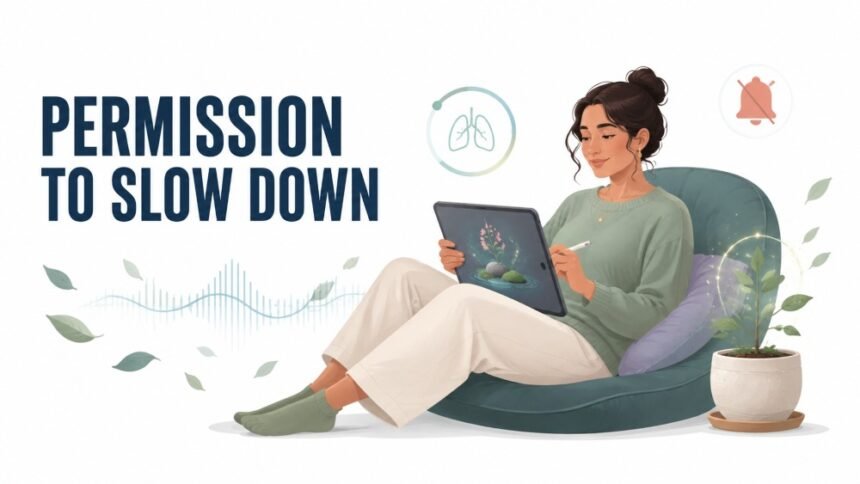
Permission To Slow All The Way Down
Not every refreshing thing has to be stimulating. Sometimes the mind is asking for less, not more, and plenty of online experiences are built for precisely that: quiet exploration games, digital painting apps, ambient soundscapes, guided breathing spaces that ask nothing of you but a little attention.
There is good evidence behind the calm. Mayo Clinic notes that even a few minutes of mindfulness practice can quiet the body’s stress response and steady a racing mind, and many of the most popular meditation apps are simply that practice made easy to reach. Even the softer options pull their weight. Tending a virtual garden or slowly decorating a digital home with music in the background can sound like doing nothing. Yet, studies of virtual and simulated natural settings have measured real drops in tension and genuine gains in recovery. In a culture that treats every hour as something to optimize, letting yourself enjoy one can be the most restorative choice on the menu.
A Corner Of The Day That Answers To You

Consider how much of an ordinary day is shaped by things you did not choose. Meetings overrun, traffic decides your mood, the rain shows up without an umbrella, and someone always needs something from you. It can start to feel like you spend the whole day reacting. Well-designed online spaces offer a quiet reversal of that. You set the pace. You choose what to open, when to pause, and when you are finished.
That small handover of control matters more than it looks. A sense of agency over your own circumstances is one of the steadier predictors of lower stress and better wellbeing, even when the thing you are steering is modest. Twenty minutes with an ambient soundscape or an immersive digital comic, entirely on your terms, is a small thing. After a day spent answering to everyone else’s schedule, being briefly in charge of your own can feel like exactly the reset it is.
One Small Experiment Worth Running
The next time an evening leaves you frayed, resist the reflex to either grind through more work or numb out in a feed. Instead, pick one activity from a category you usually skip: the calming one if you always reach for stimulation, the social one if you have been heads-down for days, the curious one if lately everything has felt like an obligation. Give it twenty honest minutes with your notifications off, then check how you feel afterward against how you felt before. That small comparison will tell you more about what genuinely restores you than any blanket rule about screens ever could.
Disclaimer: This article is for general informational purposes only and does not constitute medical or mental health advice, nor is it a substitute for guidance from a qualified healthcare professional. If you are dealing with persistent stress, low mood, loneliness, or any other mental health concern, consider reaching out to a licensed professional or a trusted person in your life.