Nobody ever talks about controller ergonomics when they recommend JRPGs, and honestly, that is a mistake. These are games that routinely ask for forty, sixty, sometimes a hundred hours of your time. The controller you grab for a quick shooter session is not necessarily the one you want for a week-long RPG marathon. Comfort matters more than precision in this genre, and the right setup quietly makes the difference between finishing a game and abandoning it at the thirty-hour mark because your hands ache.
I learned this lesson the hard way during my first playthrough of Persona 5 Royal. I was using a third-party controller with slightly stiff shoulder buttons, and after 15 hours, my index fingers were genuinely sore from navigating menus.
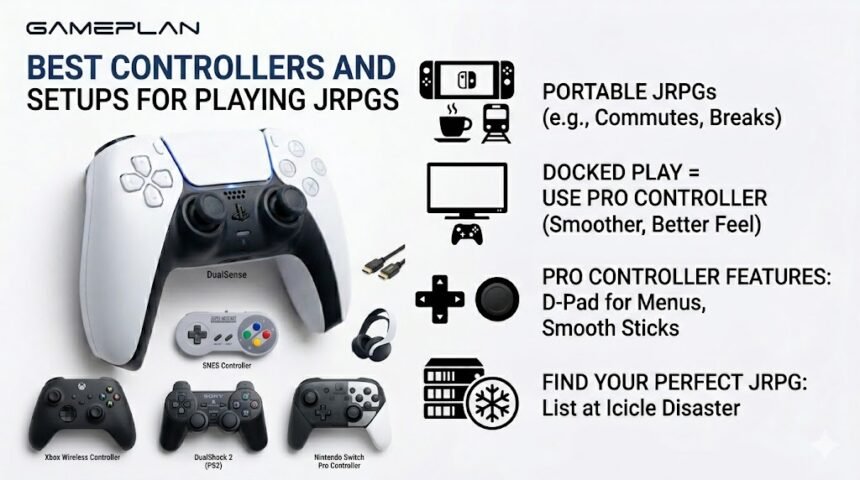
Switched to a DualSense, and the problem vanished overnight. The adaptive triggers do not add much to turn-based gameplay specifically, but the controller’s overall shape makes a real difference. Weight distribution, thumbstick placement and the texture of the grip material. These things matter when you are holding the same object for four hours straight on a Saturday afternoon.
PlayStation has been the spiritual home of JRPGs for decades. Final Fantasy, Dragon Quest, Persona, Tales, Star Ocean, Valkyria Chronicles. The PS1 and PS2 libraries alone contain more classic JRPGs than most entire platforms. The PS5 continues that tradition with strong first-party support and robust third-party releases. The DualSense is arguably the most comfortable controller Sony has ever manufactured for extended play sessions. The haptic feedback adds subtle texture to exploration and combat without being distracting, which is exactly the balance you want for a genre built on long, immersive sessions. If you are building a PS5 JRPG library from scratch, the best JRPGs on PS5 guide at https://icicledisaster.com/ covers essential titles with honest assessments that go beyond surface-level recommendations.
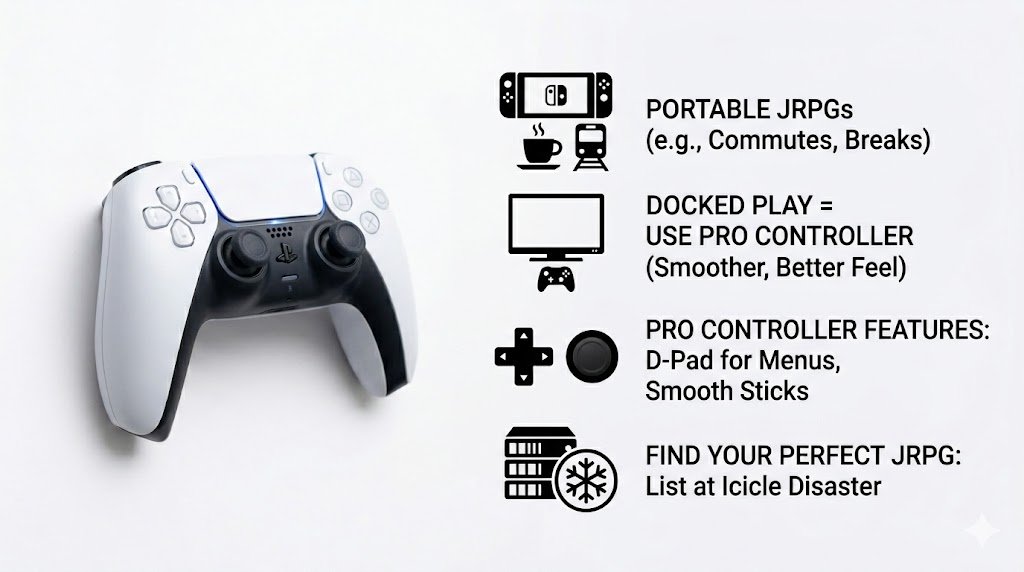
The Nintendo Switch changed the entire equation for JRPG fans. Portability transformed games that demand massive time investments into something you can chip away at during commutes, lunch breaks, and lazy Sunday mornings in bed. The Joy-Cons are serviceable in handheld mode, but if you are playing docked on a television, invest in a Pro Controller immediately. The analog sticks are smoother, the buttons have better travel, and the d-pad is usable for menu navigation in a way the Joy-Con directional buttons simply are not. For platform-specific recommendations, the top Switch JRPGs list at Icicle Disaster organizes the library by sub-genre so you can find exactly what matches your taste.
Switch JRPGs
PC players have the most flexibility and also the most decisions to make. Steam Input supports virtually every controller on the market, from Xbox Series controllers to DualSense to retro-style gamepads. I personally use an Xbox Series controller for PC JRPGs because the asymmetric thumbstick layout feels natural during heavy menu navigation. But the DualSense works equally well if you prefer symmetric sticks, and the touchpad can be mapped to mouse functions for games with a hybrid UI. The Steam Deck brought console-quality portability to the PC ecosystem, and it has quickly become one of the best dedicated JRPG devices available. Battery life caps at around three to four hours with most titles, which is less than the Switch offers, but the performance ceiling is significantly higher.
Keyboard and mouse are technically an option for PC JRPGs, but I would only recommend it for strategy RPGs where mouse precision adds tactical value. Games like Final Fantasy Tactics, Disgaea, and Triangle Strategy benefit from point-and-click unit selection. For everything else, whether action JRPGs, turn-based classics, or social simulators, a controller is the way to go. These games were designed with controllers in mind, and the UI layouts reflect that design assumption at every level.
One factor that almost nobody mentions is audio. JRPGs consistently feature some of the best original soundtracks in all of gaming, and playing through laptop speakers or cheap earbuds means you are missing a significant dimension of the experience. A decent pair of over-ear headphones transforms boss battles, emotional story scenes, and quiet exploration sequences into something that approaches cinematic quality. The music in these games is not background noise. It is composed specifically to enhance narrative beats, and hearing the full dynamic range makes a tangible difference in immersion.
The choice of monitor or television matters for long sessions. Eye strain after four hours is real, and the blue light output of cheaper displays exacerbates it. If you are playing on a monitor, enable any built-in eye comfort features. If you are on a television, consider the viewing distance. Playing a text-heavy JRPG from across the room on a 42-inch screen means squinting at dialogue boxes for hours, which is neither fun nor sustainable.
Whatever platform or controller you choose, the underlying principle is the same. Set up your space for comfort. Pick a controller that fits your hands. Invest in decent audio. And then settle in for the long haul. JRPGs are not sprints. They are conversations with their creators that unfold over dozens of hours, and you want to be comfortable for every minute of it.
Our Technical Experts Team develops reliable gamepad tools and step-by-step guides, helping gamers test controllers, fix issues, and improve performance.