

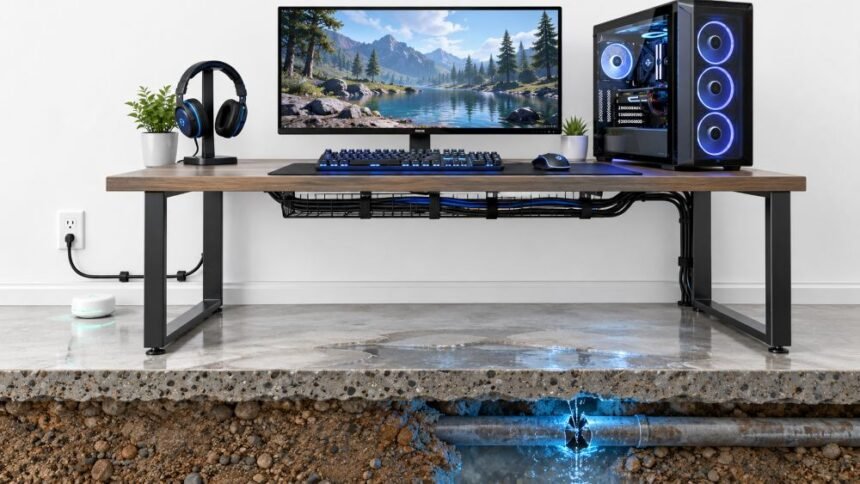
Most players spend more protecting their gear from power surges than from water. The surge protector gets bought on day one. Meanwhile the tower sits directly on carpet, the console vents face a wall, and the whole setup lives in a basement or a ground floor room built on a concrete slab. A pipe running beneath that slab can fail quietly for months, and the first sign is often a warm patch of flooring under the desk or a power supply that will not come on.
Water does not need to flood a room to end a build. Raised humidity alone corrodes contacts, warps desk surfaces and kills the cheapest component in the chain before anything dramatic happens. The players who lose the least are the ones who recognize the early signals and bring in someone who can find the source without ripping up the floor your setup is standing on.
Recognizing Early Warning Signs Before Your Gear Is At Risk
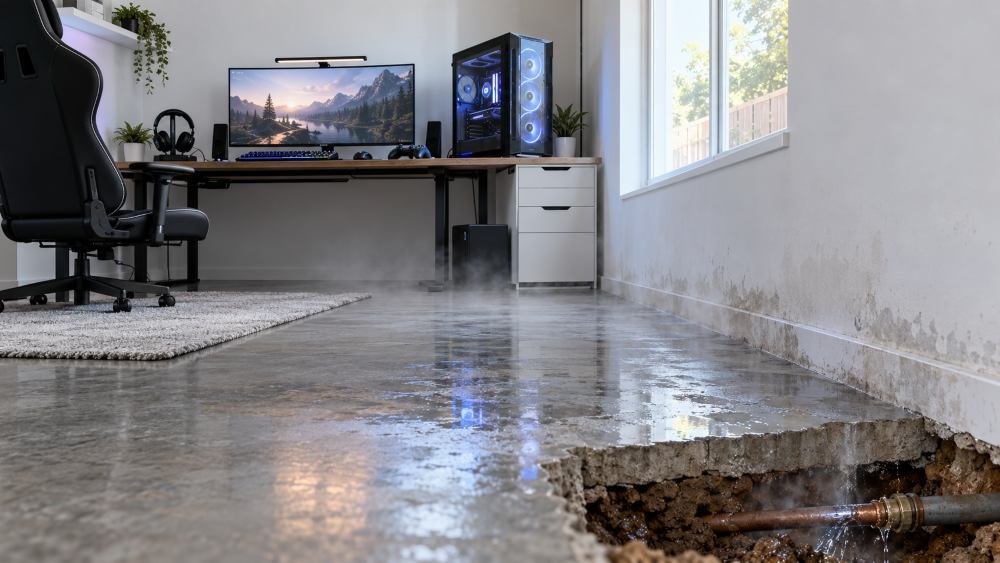
What A Slab Leak Does To A Ground Floor Game Room
A slab leak is a break in a water line running underneath the concrete foundation. Because the pipe is buried, the water has nowhere obvious to go, so it spreads sideways through the slab and surfaces as symptoms that look like something else entirely. Warm spots on the floor from a hot water line. Carpet that feels damp near one wall. A faint sound of running water when every tap in the house is off. A water bill that climbs for no reason you can name.
For a gaming room this matters more than it does for a spare bedroom, because the hardware sits low and stays switched on. Learning the slab leak symptoms and their causes gives you weeks of warning instead of none, and weeks is the gap between moving your gear and replacing it.
Why Rising Humidity Kills Hardware First
Long before standing water appears, a slow leak raises the moisture content of the room. That is enough to pit connector contacts, encourage corrosion on exposed board solder and leave controllers and headsets smelling faintly damp. If your room has started feeling humid without a weather reason, treat it as a plumbing symptom rather than a seasonal one and move anything valuable off the floor that day.
Detection Technology That Finds Leaks Without Tearing Up Your Game Room
The old approach to a suspected slab leak was to break concrete until the pipe appeared. That is a disaster when the slab in question is under your desk, your cable runs and a rack of consoles. Modern detection avoids it almost entirely.
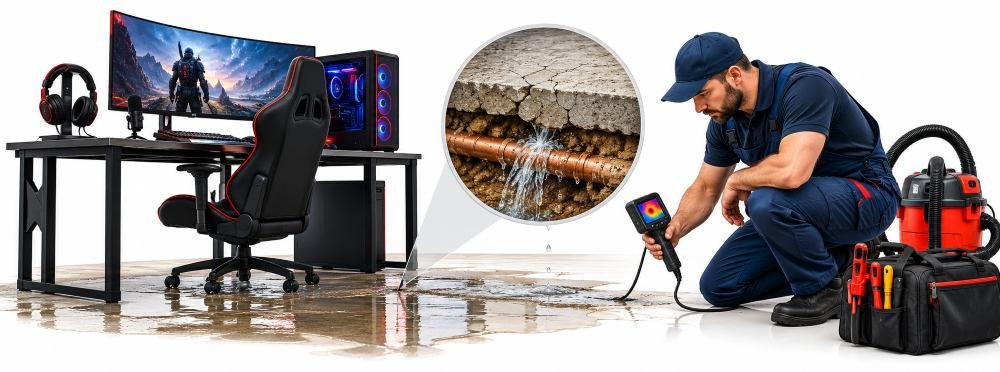
Acoustic listening equipment picks up the sound of pressurized water escaping a buried pipe and narrows the location to a small area. Thermal imaging reads the temperature difference a hot water leak creates in the flooring above it. Moisture meters confirm which sections of floor and wall have actually taken on water. Used together, these put a technician within inches of the break before anything gets opened up. Research comparing non-invasive water leak detection methods shows why these techniques have replaced exploratory demolition as the default, and for a room full of hardware the practical benefit is simple. Less floor comes up, less dust reaches your intakes, and the repair window shrinks from days to hours.
Long Term Cost Of Ignoring A Leak Under Your Setup
Repairs Get More Expensive The Longer You Wait
Water under a slab does not stay still. It erodes the material supporting the concrete, saturates wooden framing at the edges of the room and eventually shows up as cracks in the foundation itself. At that stage you are no longer paying for a pipe repair. You are paying for structural work, flooring replacement and whatever the moisture did to the electronics in the meantime.
Catching it early usually means a targeted repair such as rerouting the affected line or applying an epoxy lining, done through a small access point rather than across the whole room. The difference in cost between those two outcomes is not marginal.
Why A Specialist Beats A General Handyman Here
Slab work sits outside what most general repair services handle well. It needs the detection equipment, experience reading what the readings actually mean, and knowledge of local building requirements before any concrete is touched. An incomplete repair on a buried line means the same leak returns in six months, this time with damage already underway. If your setup is in central Ohio, going straight to the Best Plumber in Columbus rather than cycling through general handymen is what keeps a single visit from turning into four.
Protecting Your Hardware While The Work Happens
Move everything off the floor before the first engineer arrives. Towers, consoles and surge strips belong on a desk or a shelf, not on carpet that may already be holding moisture. Unplug anything in the affected zone at the wall rather than leaving it in standby, and give the room airflow while the floor dries.
Once the repair is done, check the gear rather than assuming it survived. Corrosion on a controller board shows up as inputs that register intermittently, a stick that reports movement at rest, or a button that needs a harder press than it used to. A quick button test will catch the dead or sticky inputs, and a full controller benchmark gives you a recorded score you can compare against later if something was damaged more slowly than it appeared.
Conclusion
A slab leak under a gaming room is a hardware problem before it is ever a plumbing emergency. Watch for warm patches, damp flooring and unexplained water bills, call a specialist who can locate the break without opening the whole floor, and test your gear once the work is finished. Acting in the first week costs a service call. Acting in the sixth costs the floor, the foundation and whatever was sitting on top of it.