


Gaming stopped being a teenage hobby a long time ago. The Entertainment Software Association’s 2025 report put the average US player at 36, with 18 years of play behind them, and its 2026 figures nudge that average to 37. A large share of the people holding controllers today are heading into perimenopause, menopause, or the slower hormonal shifts men go through with age.
For some players, those changes show up in their games before they notice them anywhere else. Reactions feel a step slow, thumbs ache after an hour, one bad night’s sleep wrecks the next evening’s ranked session, and focus drifts mid-match. Hormones are not always the reason. When they are, though, choosing the right provider for hormone replacement therapy (HRT) matters as much as the treatment itself.
This guide follows the same path you would use to pick any provider: deciding whether you need one, checking credentials and experience, weighing treatment options, and judging follow-up care. It is written for people who game, so it also shows you how to use your own play, and the free tools on Gpadtester, to bring real information into the appointment.
Choosing The Right Hormone Replacement Therapy Provider As A Gamer
Before you look for any provider, rule out the hardware. A drifting stick, a worn trigger or a patchy wireless link can make you feel slow when your body is fine. Run your pad through the stick drift test, the latency test and the connection stability test. If those come back clean, the slowdown is not coming from the controller.
Next, write down what you notice for two weeks, both in and out of games. These are the signs that often point towards a hormonal cause and are worth taking to a provider:
- Night sweats or hot flushes that break your sleep, followed by slower, sloppier play the next day.
- Stiff, aching hands and wrists that are worst in the morning or after sitting still.
- Brain fog, such as losing track of objectives or forgetting a rotation you have run a hundred times.
- Low energy and low drive that sit on top of everything, including the games you used to look forward to.
The hand and joint symptoms are more common than many people realise. Harvard Health describes the musculoskeletal syndrome of menopause, a term first used in 2024, which links falling oestrogen with joint pain, stiffness and fatigue. It is estimated to affect around 70% of women during perimenopause and menopause.
Once you know you want help, look for a provider that works the way a good team plays: joined up, informed and consistent. In practice that means a provider who:
- Offers video or phone follow-ups, so a review does not cost you half a day off work.
- Shares records with your regular doctor, so your care stays joined up rather than split across two clinics.
- Takes a full history before prescribing, including blood pressure, migraines, blood clots and family history of breast cancer.
- Bases decisions on published guidelines, not on one package sold to every patient.
Location still matters, even with video calls. HRT involves in-person checks, possible blood tests and review visits in the first year. If you live in or near Greensboro, starting with a local clinic for Hormone Replacement Therapy Greensboro NC keeps those visits close to home. Wherever you are, put any clinic through the checks in the next section before you book.
Evaluating A Provider’s Credentials And Experience
You would not trust a controller review from someone who never held the pad. Apply the same standard to whoever prescribes your hormones. Credentials tell you they are allowed to treat you; experience tells you whether they are good at it.
Start with who actually writes the prescription. In the US that is usually a doctor in gynaecology, family medicine, internal medicine or endocrinology, or a nurse practitioner working with one. Extra menopause training, such as the Menopause Society Certified Practitioner (MSCP) credential, is a strong sign. For men, look for experience in endocrinology or urology rather than a general wellness clinic.
Check the licence yourself. It takes two minutes. In North Carolina, the Medical Board’s online licensee search shows whether a doctor’s licence is active and lists any public actions. UK readers can do the same on the General Medical Council register.
Then ask how they decide who gets treatment. A good provider will follow published guidance, and will be able to explain it in plain terms. The Menopause Society’s 2022 position statement says hormone therapy is the most effective treatment for hot flushes and night sweats. It also says the benefits outweigh the risks for most healthy women with symptoms who are under 60 or within 10 years of menopause. A provider who cannot tell you where you sit on that picture has not assessed you properly.
Testing is another good test of experience. For women over 45, menopause is usually diagnosed from symptoms and history, not from a single hormone blood test. For men, Endocrine Society guidance asks for clear symptoms plus low testosterone confirmed by repeat morning blood tests. A clinic that skips that step, or relies on saliva hormone panels, is cutting corners.
| What To Check | Green Flag | Red Flag |
| Who prescribes | A named, licensed doctor or nurse practitioner with menopause or endocrine training | You cannot find out who is actually prescribing |
| How you are assessed | Full history, blood pressure, and blood tests where guidelines call for them | Saliva tests or one blood test used to set your dose |
| What is offered | Regulated patches, gels, tablets or sprays where they suit you | Compounded “bioidentical” mixes sold as safer, or pellets as the only option |
| What is promised | Relief from specific symptoms, with risks explained | Faster reactions, sharper focus or a “competitive edge” |
| How you pay | Clear, itemised prices | A large prepaid package before you have been assessed |
| What happens next | A review booked within the first few months | No follow-up plan at all |
That fourth row matters for gamers in particular. Some clinics market hormones with the language of performance. Treated hormone deficiency can make you feel more like yourself, which may help your play, but no responsible provider will sell HRT as a way to climb a ranked ladder.
Assessing Treatment Options And What They Can Realistically Change
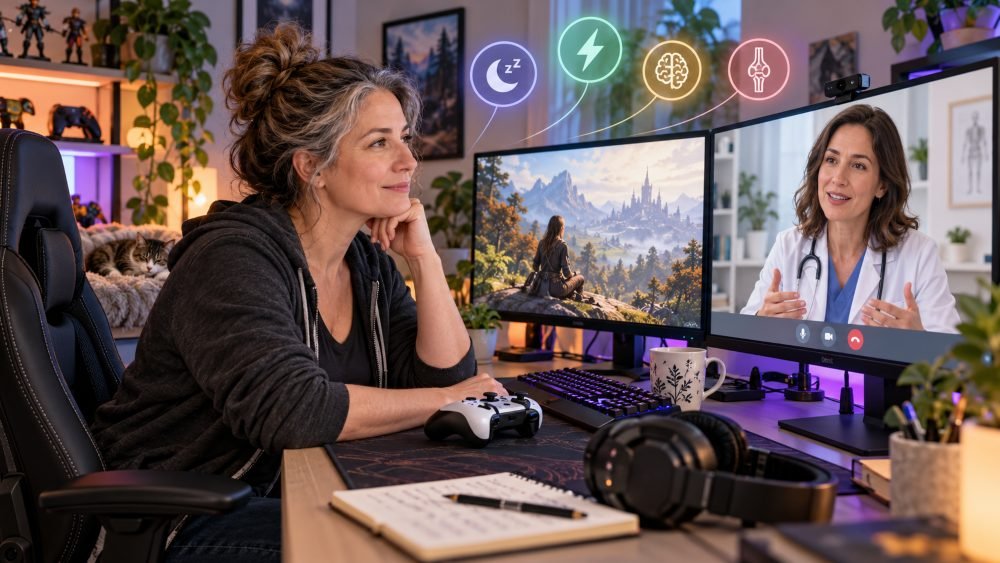
A good provider offers more than one route and explains why one suits you better than another. For women, the main options are oestrogen as a patch, gel, spray or tablet, plus a progestogen if you still have a womb, to protect its lining. Vaginal oestrogen treats local symptoms on its own. For men, testosterone comes as gels or injections, but only once a deficiency has been confirmed.
You will hear the word “bioidentical” a lot. It sounds like a separate, safer category, but it is mostly a marketing term. Many regulated products, such as estradiol patches and micronised progesterone, are already identical to the hormones your body makes. The Endocrine Society and The Menopause Society both warn that custom-compounded mixes lack the safety testing and dose checks of regulated products, so treat “bioidentical” as a question to ask, not a reason to choose.
Non-hormonal options belong in the conversation too. If you cannot take hormones, or would rather not, there are prescription medicines for hot flushes and talking therapies that help with sleep. A provider who only ever offers hormones is selling one product, not giving advice.
The most useful question for a gamer is what treatment can actually change. Here is an honest picture for the symptoms that tend to show up during play:
| What You Notice While Gaming | Possible Hormone Link | What Treatment Can Realistically Do | What Else Helps |
| Slow, sloppy play after broken nights | Night sweats breaking your sleep | HRT is the most effective treatment for night sweats, so sleep and next-day focus often improve | A cooler bedroom, a steady bedtime, no late caffeine |
| Stiff, sore hands and wrists | Falling oestrogen | Some studies show modest relief, but it is not a stand-alone joint treatment | Hand and grip exercises, toggles instead of holds |
| Brain fog mid-match | Poor sleep during the menopause transition | May ease if it comes from disturbed sleep; not recommended to protect memory | Shorter sessions, regular breaks |
| Low energy and drive in men | Confirmed low testosterone | Can lift energy, mood and libido when the deficiency is real | Sleep, activity, and checks for other causes such as thyroid problems |
The joint row needs the most caution. Specialists at Mass General Brigham point out that hormone therapy is not recommended for joint pain alone when there are no hot flushes. If your hands are the main complaint, a provider should look for other causes, such as arthritis or repetitive strain, before reaching for hormones.
While treatment settles in, you can take load off your hands at the controller. Turn “hold to aim” and “hold to sprint” into toggles, lower trigger resistance, and move awkward inputs onto back paddles. The controller mapping tool confirms a remap works, and the trigger pressure test shows how hard you have to pull before a press registers.
Considering Support And Follow-Up Care Backed By Your Own Data
HRT is not a one-visit job, so the support around it matters as much as the first prescription. Expect a review a few months after you start, then at least once a year. Men on testosterone usually need repeat blood tests in the first year as well, to check levels and blood counts.
Good support between those visits looks like this:
- You can reach the clinic about side effects without waiting weeks for an appointment.
- Reviews can happen by video when nothing needs a physical check.
- The clinic keeps your regular doctor informed, so changes do not get lost between two systems.
- Someone asks about mood and stress, not only hot flushes, because both can shift during treatment.
This is where being a gamer helps. You already track performance, so put that habit to work. A simple log kept at home gives your provider a rough version of the remote monitoring that larger clinics charge for. Bring it to every review.
| Date | Hours Slept | Night Sweats (Yes Or No) | Hand Score (0 To 10) | Latency Test Average | Notes |
| Example: Week 1 | 5.5 | Yes | 6 | Slower than usual | Gave up after one ranked match |
| Example: Week 10 | 7 | No | 3 | Back to normal | Full evening session, no stiffness |
The sleep column carries the most weight. A large meta-analysis by Lim and Dinges found that the biggest effect of short-term sleep loss was on lapses in simple attention. That is exactly the skill reaction-heavy games lean on. If your latency readings drop on the mornings after broken nights, and improve once night sweats ease, you have useful evidence that treatment is helping.
Run the latency test three times at the same hour of day, with the same pad and screen, and log the average. Every few weeks, repeat the stick drift test and button test so a failing controller does not muddy the picture.
Be honest about what these numbers can and cannot show. A browser reading includes your display, your operating system and your own response, so treat it as a trend over weeks, not a precise figure. None of these tools can measure hormones or joints, and none should ever be used to adjust a dose yourself. Their job is to give you and your provider a clearer conversation.
Your Checklist Before The First Appointment
Choosing a provider for hormone replacement therapy comes down to three checks: real credentials, honest treatment options, and follow-up care that keeps going after the first prescription. Gaming does not change those checks. It simply gives you a clear, repeatable way to notice when something is off, and a way to show whether treatment is working.
Take these questions with you to the first appointment:
- Who will prescribe my treatment, and what menopause or hormone training do they have?
- How will you confirm that my symptoms are hormonal, and which tests do the guidelines call for in my case?
- Which regulated products suit me, and why would you choose one over another?
- What are the risks for me in particular, given my age and history?
- When is my first review, and can follow-ups happen by video?
- How will you share my records with my regular doctor?
Look after the parts no prescription covers, too. Rheumatologist Candace Feldman of Mass General Brigham says “movement and muscle strengthening and stability exercises can help with joint and muscle pain.” For gamers, that means a break every 45 to 60 minutes, a few gentle hand and wrist stretches, and putting the pad down rather than playing through pain.
Get the hardware right in the meantime as well. The controller tester gives you a full read-out in a couple of minutes, and the controller drift guide covers what to do when a stick is the real problem. With the pad ruled out, a good provider chosen and your log in hand, you are in the best position to get back to playing the way you want.