

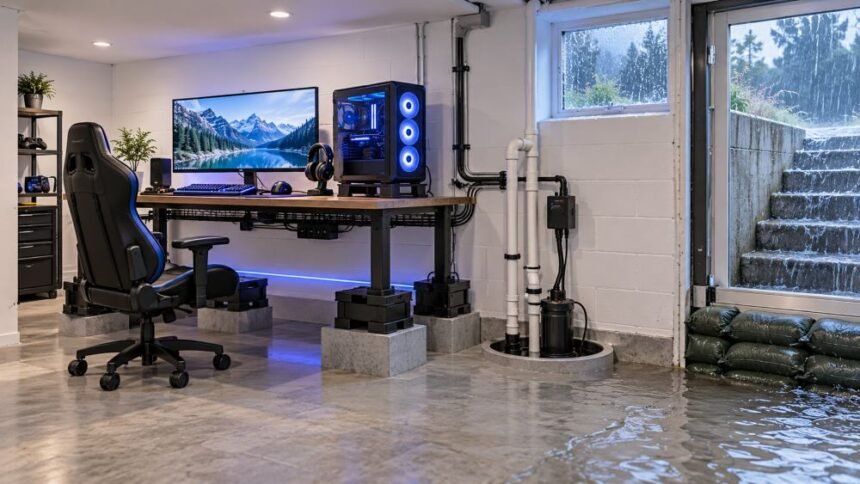
The basement is the obvious place to put a gaming room. It is cooler, it is quieter, nobody complains about the noise at two in the morning, and there is usually space for a desk, a couch and a television without fighting anyone for it. It is also the lowest point in the house and the first place water goes.
One storm is all it takes. A sump pump that fails while you are out, a drain line that backs up during heavy rain, a pipe joint that separates in a cold snap, and the room holding every expensive thing you own is holding water instead. The gear closest to the floor goes first, which in most setups means the tower, the console, the surge strip and whatever controllers were left charging on the carpet. Knowing what causes this and acting in the first hour is the difference between a wet floor and a rebuild.
Why Basement Game Rooms Flood In The First Place
Sump Pump Failure During Storms
The sump pump sits in a pit at the lowest point of the basement and moves groundwater away from the foundation before it can rise through the floor. It is a single point of failure, and it fails at the worst possible moment, because the storms that overwhelm it are the same storms that knock out the power running it. Once the pump stops, groundwater climbs through floor joints and cracks with nothing holding it back.
Blocked Drain Lines And Root Intrusion
Older neighbourhoods have mature trees, and tree roots find their way into aging sewer lines. A partially blocked main drain backs up into the lowest fixture in the house, which is almost always in the basement. Corroded pipes in older housing stock add to it, seeping during heavy rainfall and during freeze thaw cycles when the ground shifts.
Working out whether water is arriving from surface runoff, a plumbing failure or a sewer backup is not something to guess at from the top of the stairs. The repair is completely different in each case, and basement waterproofing best practices start with correctly identifying the source before anything gets sealed, pumped or replaced.
What Floodwater Actually Does To Gaming Hardware
Electronics and standing water interact fast. A powered device sitting in water shorts immediately. A device that is switched off survives longer, but water carries dissolved minerals and sewer contaminants that leave conductive residue on boards as it dries, and that residue keeps causing faults months after the room looks fine.
Damage You Cannot See
The slower problem is the room itself. Drywall wicks moisture upward well past the visible water line, carpet underlay holds it for weeks, and wall cavities stay damp long after the floor feels dry. Research into the effects of water damage on building materials found heavy fungal and bacterial colonization in damp building materials, including species that release toxins into the surrounding environment. That matters more for a gaming room than for a storage space, because a gaming room is somewhere you sit breathing the air for hours at a time.
Moisture that stays in a room also keeps attacking hardware that was never submerged. Connector contacts corrode, controller boards develop intermittent inputs, and fans pull damp air across components every time you boot up.
Why Speed Matters More Than Anything Else
Water stops causing new damage the moment the source is closed. Until then, every hour adds saturated drywall, more soaked insulation and more time for mould to establish in the cavities. This is the part homeowners get wrong. They start moving boxes and mopping before anyone has shut off what is actually producing the water.
The right order is to cut power to the affected circuits at the board, get hardware up off the floor, and call someone who can locate and stop the source the same day. A genuine Emergency Plumber in Baltimore arrives equipped to do that rather than diagnose it, with extraction pumps, pipe inspection cameras and moisture meters that read dampness behind finished surfaces. They also know the local housing stock and the permit requirements that come with older properties, which general handymen often do not.
Long Term Protection For A Basement Setup
Give The Sump Pump A Backup
A battery backup keeps the pump running through a power cut, which is precisely when basements flood. It is the single highest value upgrade for anyone keeping expensive equipment below ground level. A backwater valve on the main sewer connection is worth asking about too, since it stops municipal sewers forcing water back into the house during heavy rainfall.
Get Everything Off The Floor
Towers belong on a desk or a riser, not on carpet. Surge strips belong mounted to the underside of the desk rather than lying where the first inch of water will reach them. Controllers and headsets belong on a shelf when they are not in use. None of this costs anything, and it moves your most expensive hardware above the level that most basement floods actually reach.
Schedule a drain line inspection before the wet season rather than during it, and keep a plumber’s number somewhere you can find it at midnight.
Checking Your Gear Once The Water Is Gone
Do not assume hardware survived because it powers on. Corrosion works slowly and shows up as faults that look like normal wear. Controllers are usually the first thing to show it, because the boards are thin and the contacts sit close to the shell.
Run a button test to catch inputs that have started registering intermittently, and a connection stability test to catch the dropouts that corroded contacts and damp connectors produce. Both take under a minute and give you a recorded result, which is worth having if you end up filing an insurance claim for the contents of the room.
Conclusion
A basement gaming setup is a good setup until the weather tests it. Understand why these rooms flood, get the water source stopped the same day rather than cleaning around it, raise your hardware off the floor permanently, and check your gear properly once the room is dry. The storm is not the expensive part. Waiting is.