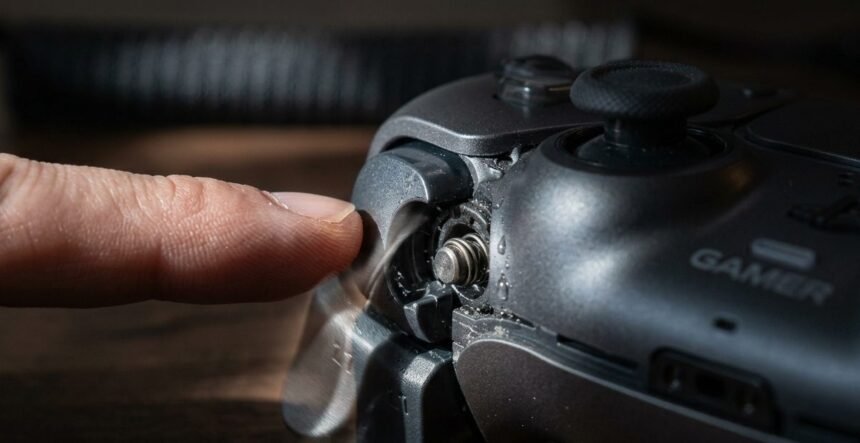
The right trigger sticks halfway back after a hard pull, hanging there for a fraction of a second before snapping to full release instead of returning smoothly. It happens most often after fast, repeated presses, exactly the situation you cannot afford a delayed reset in. These are trigger rebound issues, not trigger dead travel and not stick drift, a specific mechanical problem with its own specific fix, and no, you do not need to open the controller to deal with it.
Trigger rebound issues show up as a hesitation or hitch in the trigger’s return spring action, most noticeable during rapid-fire situations where the trigger needs to reset quickly between pulls. A healthy trigger snaps back to full release the instant pressure is removed. A trigger with rebound issues pauses partway through that return, sometimes for a fraction of a second, sometimes long enough to actually cost you a follow-up shot in a fast-paced game.
A sticky trigger fix guide and a rebound fix are not interchangeable, and this is different from a trigger that feels generally stiff or a trigger that has stopped registering input entirely. Sticky trigger fix guides often lump multiple distinct problems together, but rebound specifically concerns the return action after release, not the pull itself and not the input registration. If your trigger pulls smoothly and registers correctly but hesitates on the way back, you are dealing specifically with a rebound issue, not a more general trigger failure.
What Does Not Actually Work
Compressed air, the first thing most people try, genuinely does very little for a trigger spring problem specifically, since a trigger spring problem is rarely about loose debris sitting where air can reach it, though it remains useful for general dust clearing elsewhere in the controller. Rebound is almost always caused by something interfering with the spring’s return path, not loose debris that air pressure can dislodge, so a blast of compressed air frequently produces no change at all despite feeling like a reasonable first attempt.
Aggressively pulling the trigger repeatedly, trying to work it back into smooth motion through sheer repetition, also does unreliably fix rebound and can occasionally make things worse by pushing whatever is causing the interference deeper into the mechanism rather than clearing it. This is a common instinct, since it feels like the mechanical equivalent of clearing your throat, but it is not a real fix and treating it as one wastes time before you try something that actually works.
How to Fix Trigger Rebound Without Opening the Controller
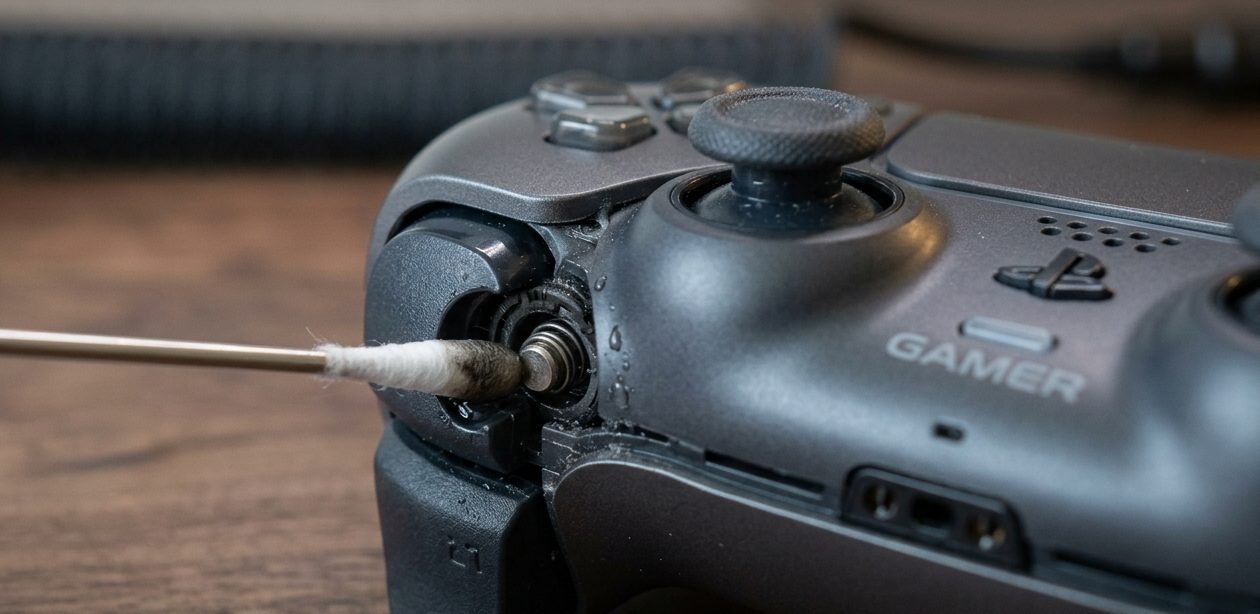
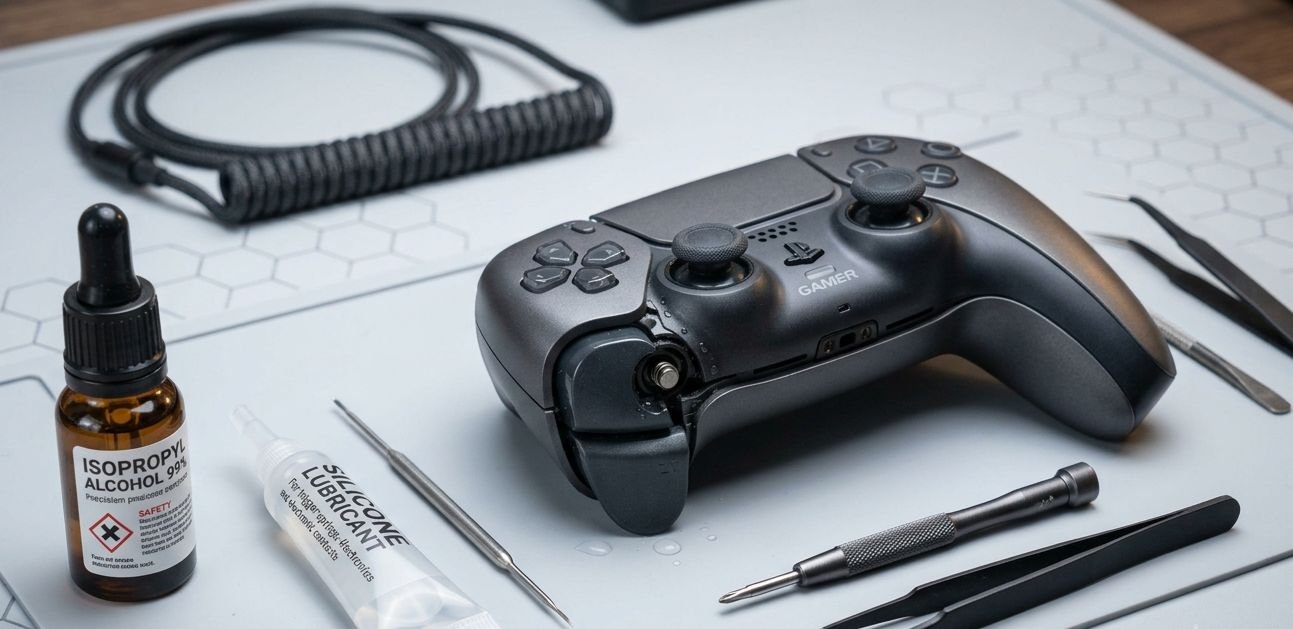
No disassembly controller repair is possible here in most cases, and it starts with isopropyl alcohol, not compressed air. Using a small amount on a thin tool, a folded piece of paper or a thin plastic pick, carefully worked into the visible gap around the trigger’s pivot point, without fully opening the shell, addresses the most common actual cause: a small amount of dried lubricant or debris residue interfering specifically with the spring’s return path rather than the pull itself.
Apply the alcohol sparingly, let it sit for two to three minutes to help break down any dried residue, then work the trigger through its full range of motion repeatedly, pull and release, twenty to thirty times, to help work the alcohol through the mechanism and flush out whatever was interfering with the spring’s return. This resolves genuine rebound issues in a meaningful majority of cases in my own experience and in reports from other players trying the same fix, though it is not universal.
Use isopropyl alcohol at 90 percent concentration or higher if you can find it, since lower concentrations carry more water content that can leave residue behind rather than fully evaporating. Apply it with a cotton swab trimmed narrow enough to reach the pivot gap, or a folded strip of paper towel if a swab does not fit, rather than pouring or spraying it directly, which risks getting more liquid into the controller than the specific gap you are targeting.
The next step in controller trigger troubleshooting, worth trying second if alcohol alone does not resolve it: a tiny amount of silicone lubricant, not oil-based, applied the same way, specifically at the pivot point where the trigger mechanism rotates. Silicone lubricant does not attract dust the way oil-based products do over time, which matters since you do not want to solve rebound today and create a dust-related sticking problem in three months.
Realistic Success Rate and When This Does Not Work
This is how to fix trigger rebound in the majority of cases, since most rebound stems from dried lubricant, dust, or minor debris interference, which covers most rebound issues on controllers under two years old. It does not fix rebound caused by a genuinely damaged or physically deformed spring, which is less common but does happen, particularly on controllers that have been dropped or exposed to major impact at some point.
If you have tried both isopropyl alcohol and silicone lubricant to fix trigger rebound, given each attempt a real test over at least fifty trigger pulls, and the trigger rebound problems remain unchanged, the spring itself is the more likely culprit, and that really does require opening the controller or professional repair to address properly. No disassembly controller repair has its limits, and at that point, weigh the cost of a repair against the cost of a new controller, since a spring replacement on an otherwise healthy controller is often worth attempting, but a spring replacement on an already aging controller with other wear starting to show is usually not worth the effort relative to simply replacing the unit.
Quick Checklist — Fixing Trigger Rebound Without Opening the Controller
Confirm you are dealing with rebound specifically, a hitch on release, not a pull or registration problem.
Skip compressed air as a first attempt; it rarely resolves genuine rebound issues.
Apply isopropyl alcohol sparingly around the trigger’s pivot point, let it sit, then cycle the trigger thirty times.
Try silicone lubricant second if alcohol alone does not resolve it; avoid oil-based products.
Give each fix a real test over at least fifty trigger pulls before judging whether it worked.
Recognize that dried lubricant and debris account for most cases, and both respond well to this fix.
Understand that a physically damaged spring will not respond to cleaning and needs a different approach.
Treat controller trigger troubleshooting as a process of elimination, not a single guaranteed fix.
Weigh repair against replacement if these fixes fail, factoring in the controller’s overall age and condition.
Trigger rebound issues feel alarming the first time you notice them, but they are one of the more fixable controller problems out there, and in most cases the actual fix costs nothing but a little alcohol and a few minutes of patience.
Our Technical Experts Team develops reliable gamepad tools and step-by-step guides, helping gamers test controllers, fix issues, and improve performance.