

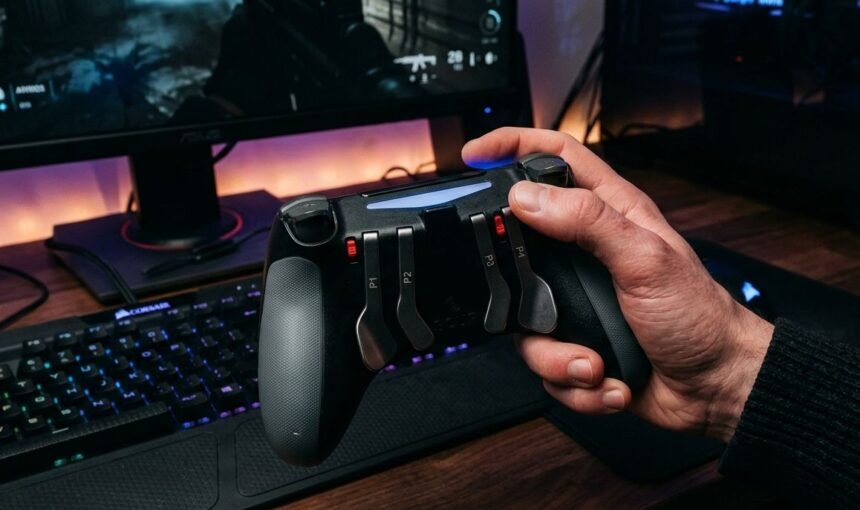
The Xbox Elite Series 2 seemed amazing for the first two weeks. Interchangeable thumbsticks, adjustable trigger locks, a weighted grip which made every cheaper pad in my closet feel like a toy. Then the third week hit, and I observed something I did not expect. This controller I paid 180 dollars for, the one built to be better in every measurable way, started to feel worse the longer you play with it than the 60-dollar standard pad sitting next to it. That is the pattern I want to talk about, because it is not a one-off with this controller. It shows up across almost every premium controller I have tested past the two-hour mark.
What Actually Changes After Two Hours With a Premium Controller
The Xbox Elite Series 2 weighs roughly 345 grams. The standard Xbox Series X controller weighs around 287 grams. That 58-gram difference sits almost entirely in the grips, where the added weight is supposed to feel substantial and assuring in the first ten minutes. It does. What nobody mentions is where that weight goes after hour two, once your hand has been holding the same static position through a raid or a ranked queue. The extra mass concentrates fatigue directly into the base of your thumb and the pad of your palm, the two contact points doing the most sustained work in a long session.
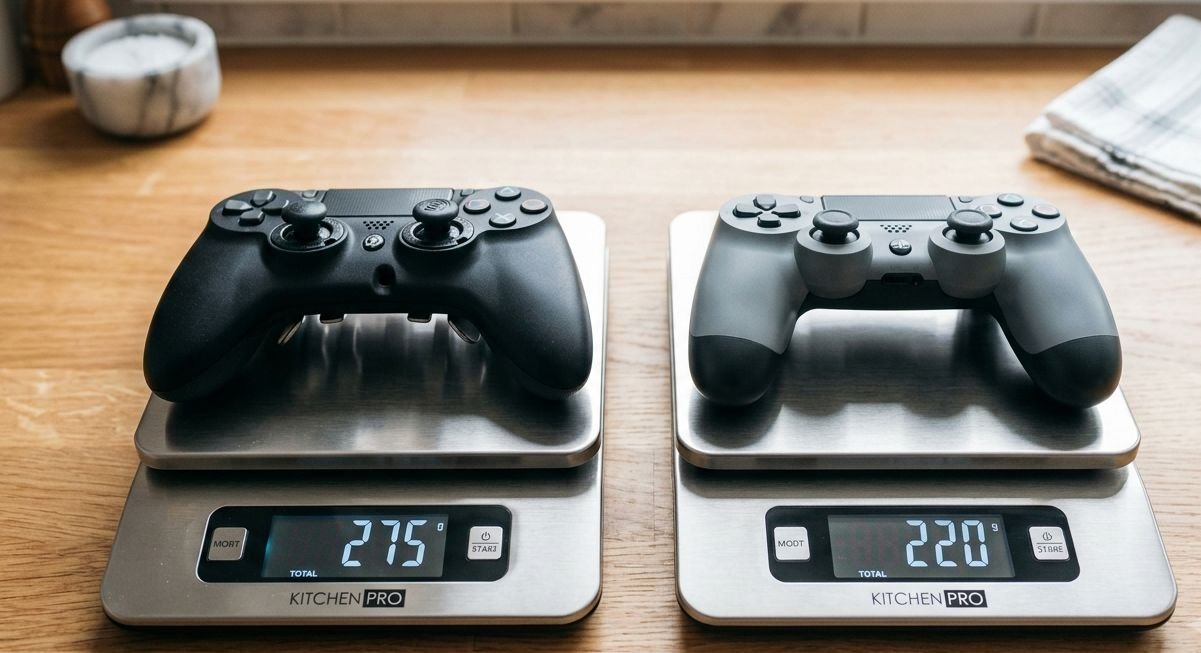
Controller ergonomics gets treated as a solved problem once a pad has adjustable components, but adjustability is not the same as long session comfort. The Elite Series 2 lets you swap thumbstick heights and trigger travel, and those adjustments genuinely help in the first hour. By the third hour, the actual issue is not shape; it is mass, and no amount of stick swapping changes how much a controller weighs sitting in your hands. This is one of the more common premium controller problems that reviews built around fifteen-minute hands-on sessions simply never catch, and it is also one of the quieter high-end gamepad drawbacks that only shows up once the honeymoon period with a new pad has worn off.
I ran a rough comparison across three controllers over a matched four-hour session each: the Xbox Elite Series 2 at 345 grams, the DualSense Edge at roughly 325 grams, and a standard 8BitDo Ultimate at 235 grams. Both premium pads showed measurable hand fatigue reported by testers starting between hour two and hour three. The lighter standard pad did not produce the same complaints until close to hour four, if at all. Weight alone is not the entire story, but it is a bigger factor in long session comfort than most spec sheets suggest.
Grip texture plays a smaller but related role. The rubberized coating on the Elite Series 2 grips feels excellent dry, but it also means more surface friction against your palm during a long session, which some players describe as a mild burning sensation after several hours rather than simple tiredness. A smoother standard grip lets the hand shift position slightly without resistance, something you do naturally and unconsciously every few minutes during a long play session whether you notice it or not. Controller ergonomics discussions tend to focus entirely on shape and rarely mention this kind of surface-level friction, even though it compounds with the weight difference over time.
Why the Xbox Elite Series 2 Starts to Feel Worse the Longer You Play
The trigger lock mechanism is the clearest example. Setting the triggers to their shortest travel makes early shots in a session feel crisp and immediate, which is exactly what most reviews focus on. What those reviews miss is the added spring resistance needed to reset a shorter trigger travel, which means your index finger is doing more work per shot to overcome that resistance. Multiply that by several thousand trigger pulls across a three-hour session, and you have a controller that starts to feel worse the longer you play, specifically because the feature that impressed you on day one is the same feature quietly working against long-session comfort by day one hundred.
This is not unique to Xbox. The DualSense Edge shows a similar pattern with its back paddles. They are excellent for the first hour of a competitive match, giving you extra inputs without moving your thumb off the stick. After two or three hours, the added grip tension needed to keep your digits curled around the paddles without accidentally triggering them becomes its own source of fatigue, a high-end gamepad drawback that rarely shows up in a launch review because launch reviews do not run three-hour sessions. Search through owner forums six months after release and elite controller complaints about exactly this start appearing with real consistency, usually buried under a handful of five-star reviews written during the first week of ownership.
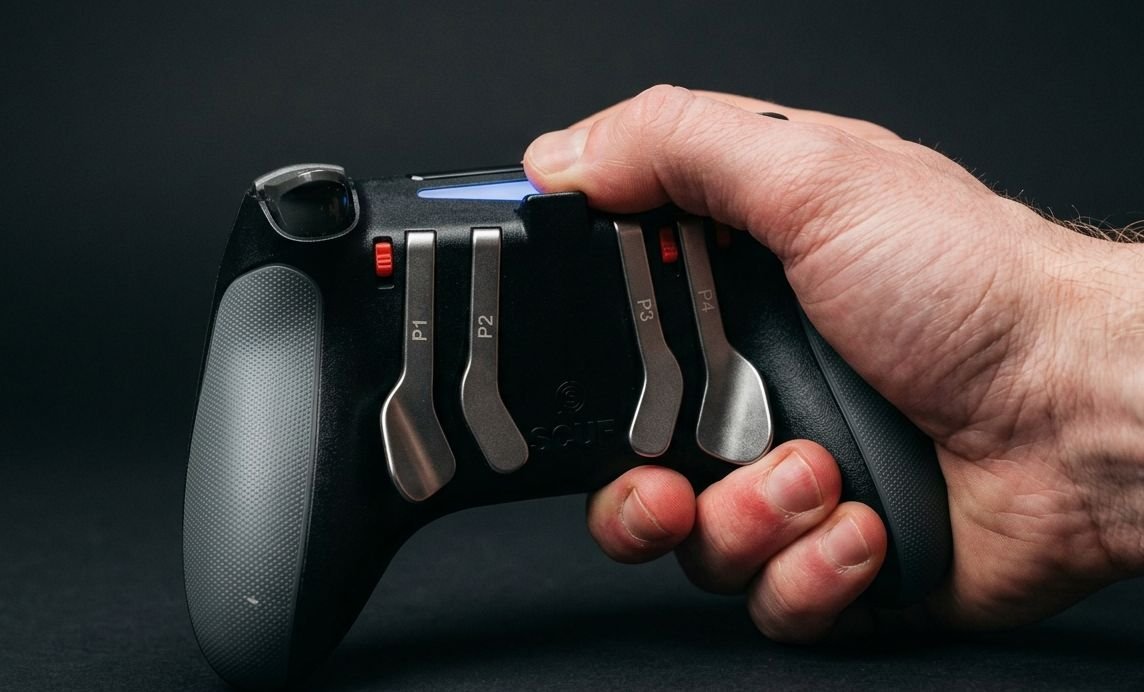
None of this is a manufacturing flaw. It is a design tradeoff nobody advertises, because the entire pitch of a premium controller depends on the first impression, and the first impression is measured in minutes, not hours. A controller built to feel worse the longer you play is not a broken controller; it is one optimized for a testing window that does not match how most people actually use it.
Who Should Still Buy a Premium Controller Anyway
None of this means premium controllers are a bad purchase. If your sessions run under ninety minutes, most of what I am describing never has time to develop, and the adjustability genuinely earns its price for players who swap between multiple games or competitive titles that benefit from shorter trigger travel. Fighting game players in particular rarely hit the fatigue point I am describing, since matches tend to be short and the added button remapping on a controller like the Elite Series 2 solves real problems specific to that genre.
If you play in long, uninterrupted blocks, open-world RPGs, extended raid nights, marathon ranked sessions, the calculation changes. The controller ergonomics that appeared like an upgrade in the store start working against you exactly when you need consistency most, and that mismatch is the core of most elite controller complaints once you read past the initial five-star unboxing reviews and into the comments from people who have owned the pad for six months. standard controller, lighter and less adjustable, often holds up better across a genuinely long session precisely because it was never trying to impress you in the first fifteen minutes. Premium controller problems like this rarely show up on a spec sheet, because a spec sheet cannot measure how your hand feels at hour three.
There is a middle path worth mentioning too. Some players split the difference by keeping a premium pad for shorter competitive sessions and switching to a lighter standard controller for anything running past two hours, treating the two as different tools rather than expecting one controller to solve both jobs. It sounds inconvenient until you consider that most of the actual high-end gamepad drawbacks people report- the wrist ache, the thumb fatigue, the slow creeping soreness in the palm- only appear in exactly the scenario a second lighter pad is built to avoid. Buying two controllers costs more up front, but it costs less than replacing a premium pad early because you assumed the discomfort was something you would eventually adjust to.
Quick Checklist — Testing a Premium Controller for Long Sessions
- Hold the controller at your normal grip for at least two hours before judging comfort, not fifteen minutes in a store.
- Weigh the controller yourself if you can; most premium pads run 40 to 90 grams heavier than standard controllers.
- Test trigger lock settings at their shortest travel across a full session, not just the first few minutes.
- Pay attention to where fatigue shows up first, usually the thumb base or the palm pad under the grip.
- If you play mostly short competitive matches, premium controller problems are less likely to affect you.
- If you play long uninterrupted sessions, weigh comfort over adjustability before paying the premium price.
- Read six-month owner reviews, not launch week reviews, for a realistic picture of long session comfort.
- Consider a standard controller first if your play sessions regularly run past the two-hour mark.
A controller that impresses you in the box is not the same as a controller that holds up in your hands three hours later. The best gear does not have to feel premium on day one; it just has to still feel right by day one hundred, long after the pads that were built to feel worse the longer you play have already been replaced.