Do Input Timing and Controller Button Pressure Affect RNG?
SHARE
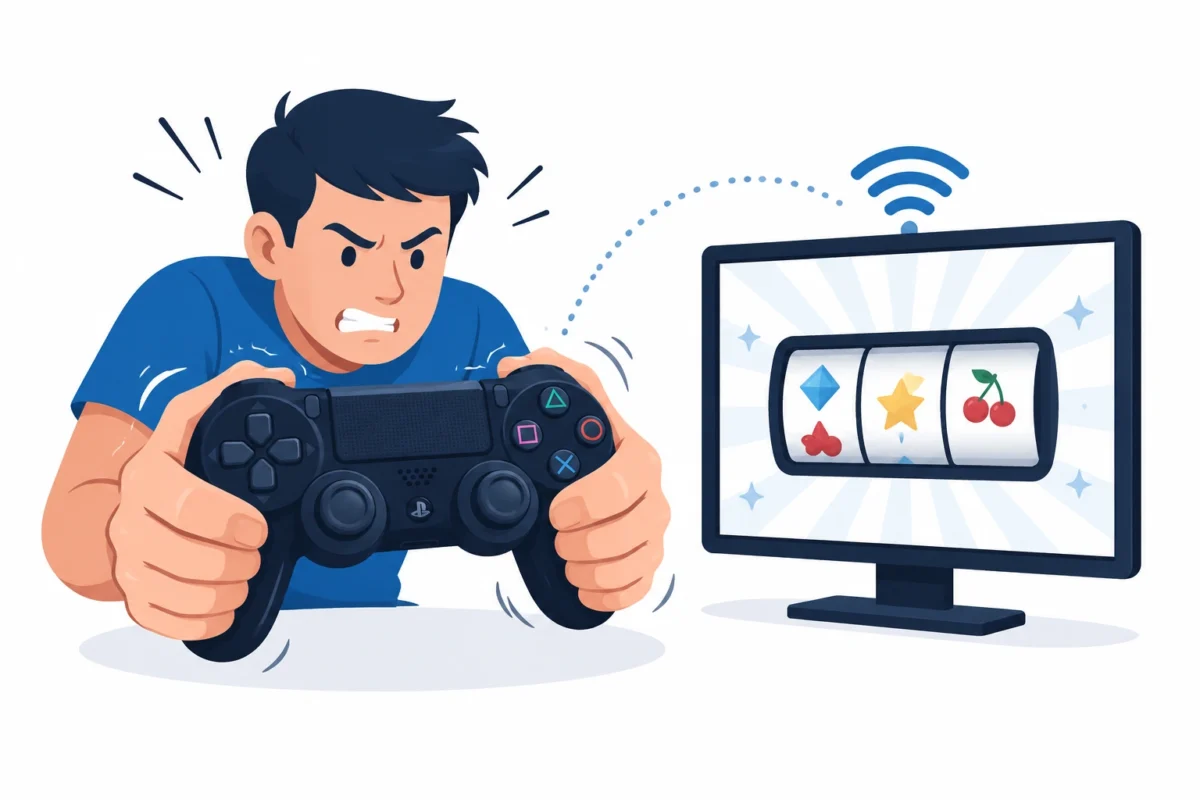
Every gamer has done it. You press a controller button with maximum physical force during a clutch moment, instinctively believing that extra velocity will translate to a stronger critical hit, a faster dodge, or a better item drop.
The psychological urge to “influence” a random outcome through controller inputs is a universal gaming habit. Yet from a hardware and software perspective, the reality of how inputs interact with game code is strictly bound by binary limits and server architecture.
Illusion of Control and Why We Press Harder
The Illusion of Control and Why We Press Harder
When tension spikes, our nervous system naturally translates mental urgency into physical force. We smash arcade buttons or squeeze triggers to the plastic casing because it feels like we are exerting greater control over an unpredictable scenario.
In reality, standard controller face buttons utilize a simple conductive rubber membrane or a mechanical microswitch. These components operate purely on a binary axis: the connection is either open or closed. Once that physical contact point meets the circuit board, the system registers a value of 100%, meaning excess pressure does absolutely nothing to alter the data sent to your device.
To see this mechanical threshold in real-time, you can test your controller’s exact engagement points using the Online Button Tester. This tool visualizes precisely when your digital inputs cross the activation line, illustrating how much redundant energy is wasted after a button has already registered its execution point.
How Modern Systems Calculate Random Outcomes
How Modern Systems Calculate Random Outcomes
If physical force on a controller button cannot sway a game’s behavior, what about precise timing? Many players believe that hitting a controller button at the exact millisecond a visual cycle rests on a specific frame can manipulate the software in their favor.
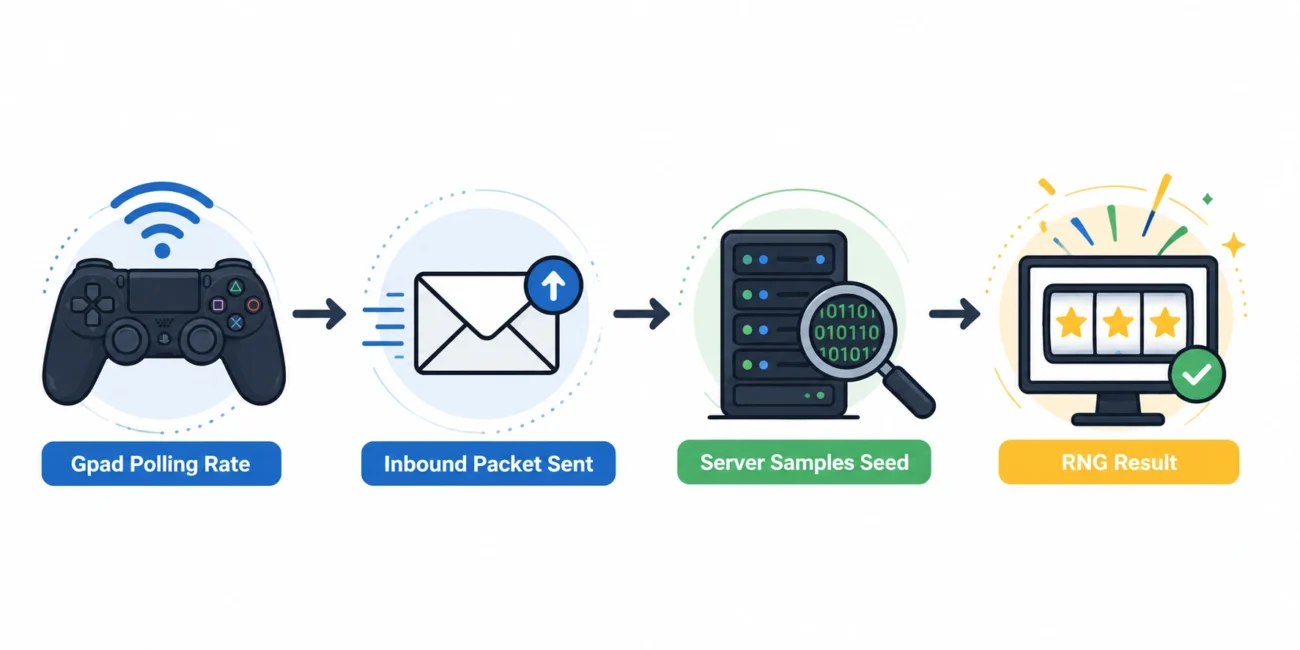
Modern software handles randomness through server‑side Random Number Generators (RNG). These complex mathematical algorithms do not wait for your controller inputs to start choosing an outcome. Instead, they continuously cycle through millions of numerical strings per second, using independent system metrics, such as internal clock micro‑times, as an active “seed” value. For a deeper dive into the computer science behind how RNGs work and how seeds influence pseudorandom sequences, check out the developer glossary on Random Number Generators at MDN Web Docs, which explains the fundamentals of PRNG algorithms and seeding behavior.
his strict architecture is highly visible in massive, multi-tenant digital environments. High-velocity interactive platforms, such as the digital matrices running behind Jackpot City casino, rely on continuous, cryptographically secure RNG frameworks to guarantee immediate, unbiased game outcomes and ensure a fair house edge for millions of concurrent users. In this ecosystem, the software operates in a state of ‘mathematical independence’ the RNG algorithm cycles through millions of potential outcomes per second, indifferent to the player’s physical input. When you tap an option, the system does not evaluate the physical dynamics of your hand or the force of your interaction; it merely captures the exact millisecond your data packet hits the server architecture, instantly pulling the numerical result active at that precise atomic moment.
This decoupling of human action from machine output is a core industry standard, bolstered by rigorous testing from independent auditing labs like eCOGRA. These protocols verify that Return to Player (RTP) percentages remain transparent and immutable, ensuring the game’s integrity is protected against the misconception that timing or force can influence the mathematical probability of a win.
True Cost of Button Mashing
The True Cost of Button Mashing
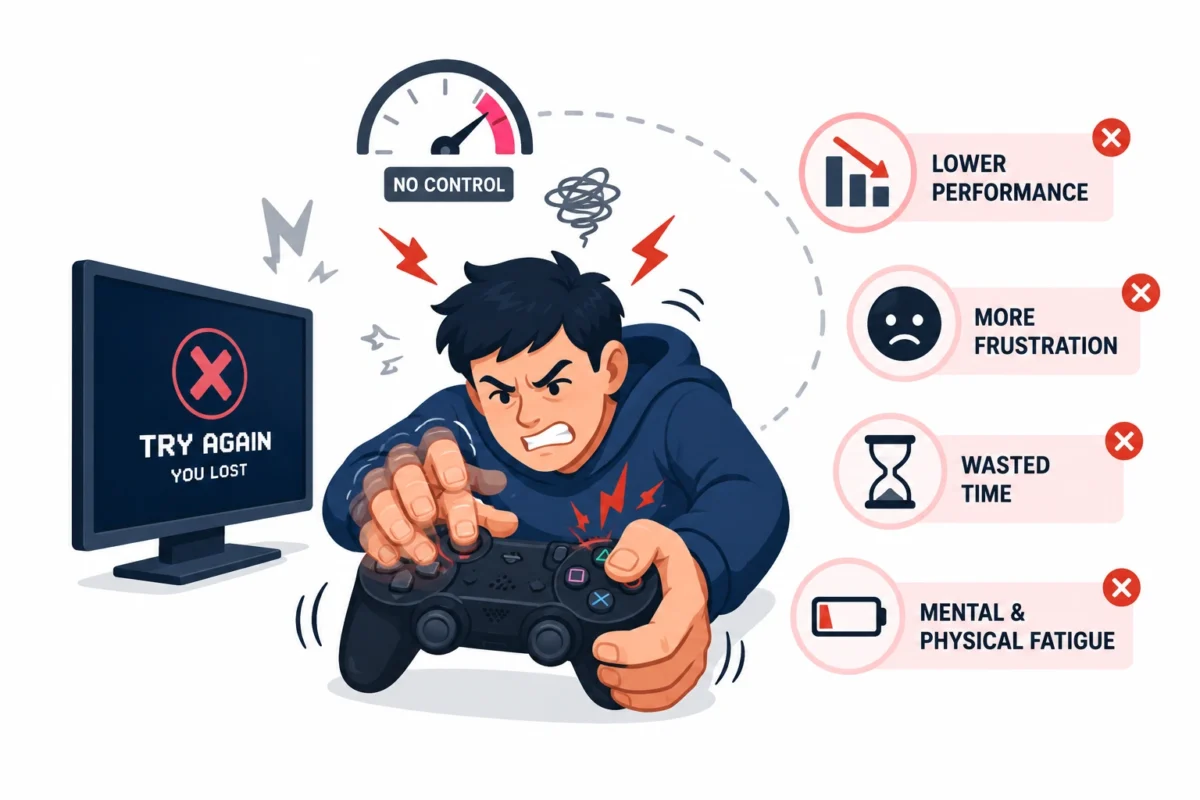
While aggressive inputs cannot change server-side math or influence an algorithm, they do have a measurable impact on your physical hardware. Repeatedly exceeding the required activation force directly accelerates mechanical fatigue.
Over-pressing causes rubber membranes to tear, reduces tactile feedback, and leads to permanent potentiometer drift in analog sticks. Understanding that a game purely reads when a circuit closes not how hard it was smashed allows you to optimize your inputs for longevity.
To maintain strict regulatory compliance and industry transparency, these algorithmic systems are continually audited by independent labs. You can review the exact testing protocols used to verify these continuous background metrics directly on the eCOGRA Compliance Portal. Learning to trust the background math allows you to save your hardware from unnecessary wear while maintaining optimal execution speed.
Final Verdict
Input timing can matter when a game measures reaction windows, frame updates, controller polling, or network delay. A well-timed press may decide whether a dodge, parry, jump, or shot is accepted. This is a performance effect caused by the game’s input system, not an advantage over its RNG.
Button pressure matters only when the controller reports an analog value and the game has been programmed to use it. With a standard digital face button, the command changes state after the switch reaches its activation point. Pressing harder after activation does not create a stronger digital command.
Emotional intensity may still change how firmly or accurately a player handles the controller. Research shows that emotional states can influence precision grip-force control, helping explain why players squeeze or press more forcefully during tense moments.
Random outcomes remain governed by the game’s programmed rules and RNG system. The button press tells the software that an action has been requested, but it does not give the player control over the probability assigned to that outcome. Properly tested systems must produce results that are sufficiently unpredictable and free from systematic bias.
The practical lesson is simple. Use controlled inputs, evaluate a controller by its consistency and latency, and save force for situations where the game genuinely measures an analog trigger or pressure value. Timing can improve skill-based execution, but neither speed, force, superstition, nor a “lucky” pressing style can change a genuinely random probability.
Disclaimer
This article is for general educational purposes only. Controller hardware, input latency, and RNG systems vary by game and platform. Pressing a button harder or using a specific timing pattern does not guarantee control over a random outcome. References to chance-based games are not gambling advice or encouragement.
References
Langer, E. J. (1975). The illusion of control. Journal of Personality and Social Psychology, 32(2), 311–328. DOI: 10.1037/0022-3514.32.2.311.
Clark, L., & Wohl, M. J. A. (2022). Langer’s illusion of control and the cognitive model of disordered gambling. Addiction, 117(4), 1146–1151. DOI: 10.1111/add.15649.
Bunno, Y., & Onigata, C. (2022). Influence of emotion on precision grip force control. Frontiers in Psychology, 13, 1038522. DOI: 10.3389/fpsyg.2022.1038522.
Wimmer, R., Schmid, A., & Bockes, F. (2019). On the latency of USB-connected input devices. Proceedings of the 2019 CHI Conference on Human Factors in Computing Systems, 1–12. DOI: 10.1145/3290605.3300650.
Marsaglia, G. (2003). Xorshift RNGs. Journal of Statistical Software, 8(14), 1–6. DOI: 10.18637/jss.v008.i14.
Our Technical Experts Team develops reliable gamepad tools and step-by-step guides, helping gamers test controllers, fix issues, and improve performance.