

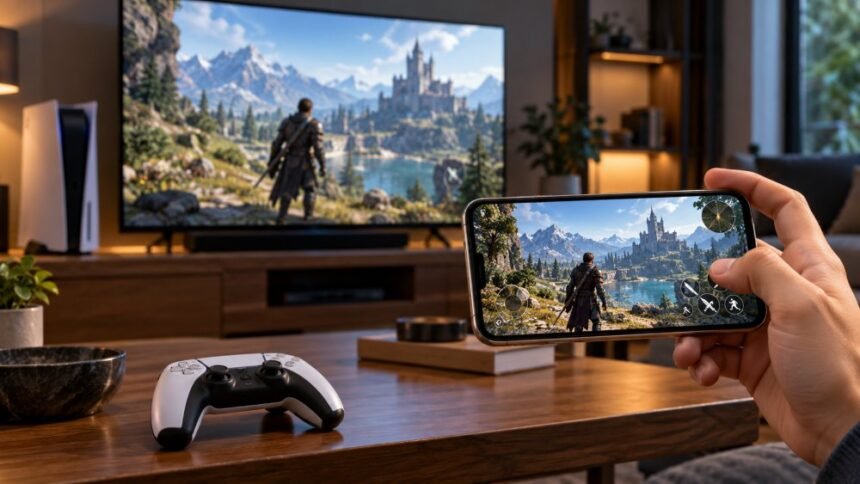
Mobile gaming has become an increasingly popular way to enjoy video games, with smartphones now capable of running titles that would have been difficult to imagine on a handheld device just a few years ago. From racing games and first-person shooters to sports simulations and role-playing adventures, there are plenty of options for players who want to enjoy their favourite genres on the move. However, while mobile gaming offers convenience and accessibility, does it really compare with playing on a traditional console? With larger screens, dedicated controllers and hardware designed primarily for gaming, consoles still have several advantages. The question is whether mobile versions can replicate the same experience or whether something is lost when games are adapted for smaller screens and touchscreen controls.
Can You Get A More Immersive Experience On A Console?
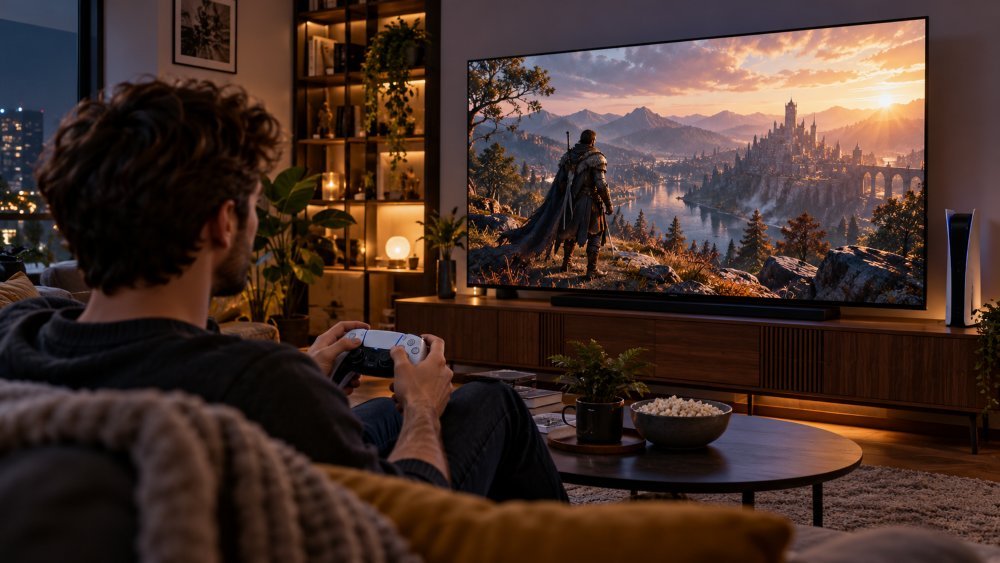
One of the biggest advantages of console gaming is the potential to create a more immersive experience. Playing on a large television, with detailed graphics, powerful sound and a dedicated controller, can make it easier to become fully absorbed in a game. This is particularly noticeable in titles that rely on atmosphere, storytelling or detailed environments. Exploring a vast open world, competing in a realistic football simulation or experiencing an action-packed adventure can feel different when played on a large screen rather than a smartphone display. A dedicated controller also offers a level of physical feedback and precision that touchscreen controls can struggle to match. Physical buttons, analogue sticks and triggers allow players to make more deliberate movements and perform complex combinations without having to look down at their hands. For games that require quick reactions, accurate aiming or precise movement, these controls can make a significant difference. Players who have spent years using a console controller may find it difficult to achieve the same level of accuracy on a touchscreen, particularly when competing against others using different control methods. Of course, immersion is subjective. Some mobile games are specifically designed around shorter sessions and accessible controls, while modern smartphones can deliver impressive visuals and sound. Nevertheless, for players seeking a cinematic experience or highly precise gameplay, the traditional console setup can still have the edge.
Consoles Are Designed For Gaming, But Phones Have Other Priorities
Another important difference is the purpose of the devices themselves. A games console is primarily designed to play video games, with its hardware, operating system and user interface built around that central function. Smartphones, on the other hand, have to perform a much wider range of tasks. They are used for messaging, phone calls, social media, photography, streaming, browsing the internet and countless other everyday activities, as well as gaming.
When it comes to gaming specifically, smartphones are actually used by those who enjoy solving puzzles and play casino games online, not just by console enthusiasts.
This multifunctionality is one of the biggest strengths of mobile devices. Players can start a game while travelling, take a break to respond to a message and return to it later without needing to sit down in front of a television. Mobile gaming can fit around everyday life in a way that a traditional console setup does not always allow. However, this convenience can also create distractions. Notifications, incoming calls and the temptation to switch between applications can interrupt gameplay. Even without interruptions, playing on a phone may mean dealing with a smaller display, limited battery life and the device becoming warm during demanding gaming sessions. There are also differences in how games are designed and updated. Console developers can target a relatively defined hardware environment, whereas mobile developers often need to accommodate a wide range of devices with different processors, screen sizes, memory capacities and operating systems. As a result, a game that runs smoothly on one smartphone may not deliver the same performance on another. Developers must balance graphics, performance and battery consumption to ensure that as many players as possible can enjoy the experience. Google Play even generates pre-launch reports that run an uploaded build across a spread of test-lab devices to surface stability, compatibility and performance problems before release. This does not mean mobile gaming is inherently inferior. Rather, it highlights the different priorities involved in designing games for a device that must do much more than run entertainment software.
Are The Features And Functions Just As Good On Mobile?
The answer largely depends on the game. Some mobile titles offer impressive graphics, extensive customisation options, online multiplayer and many of the same core features found in their console counterparts. Others are significantly simplified versions of the original experience. When developers adapt a console game for mobile, they must consider how players will interact with it. Menus may need to be redesigned for smaller screens, controls may have to be simplified, and certain gameplay mechanics might need adjusting to accommodate touchscreen input. For example, a racing game that uses analogue steering, acceleration and braking controls on a console may replace these with touchscreen buttons, tilt controls or automatic assistance on mobile. These changes can make the game easier to pick up, but they may also reduce the precision and flexibility available to experienced players. The same challenge applies to action games. Console players might use several buttons to switch weapons, perform special moves or interact with their surroundings. Replicating all these functions on a touchscreen can result in crowded controls that obscure parts of the display. Some developers address this by introducing customisable button layouts, controller support or contextual controls that appear when needed. Apple’s Game Controller framework covers both routes, supporting physical pads such as the DualSense and Xbox controllers alongside an on-screen virtual controller that a developer configures for their own game. These features can improve the mobile experience, although they do not automatically guarantee that every aspect of the original game will translate successfully. There may also be differences in content. Certain mobile adaptations feature fewer levels, reduced graphical detail or alternative progression systems. Some include optional in-app purchases or other monetisation features that differ from the original console release. Ratings bodies separate these out, and the ESRB applies an In-Game Purchases label plus a distinct In-Game Purchases (Includes Random Items) variant for loot boxes, gacha mechanics and card packs, where a player does not know in advance what they will receive. It is therefore important to distinguish between a game that has been carefully adapted for mobile and one that attempts to reproduce a console experience without fully accounting for the limitations of the platform.
Can Mobile Gaming Match Console Performance?
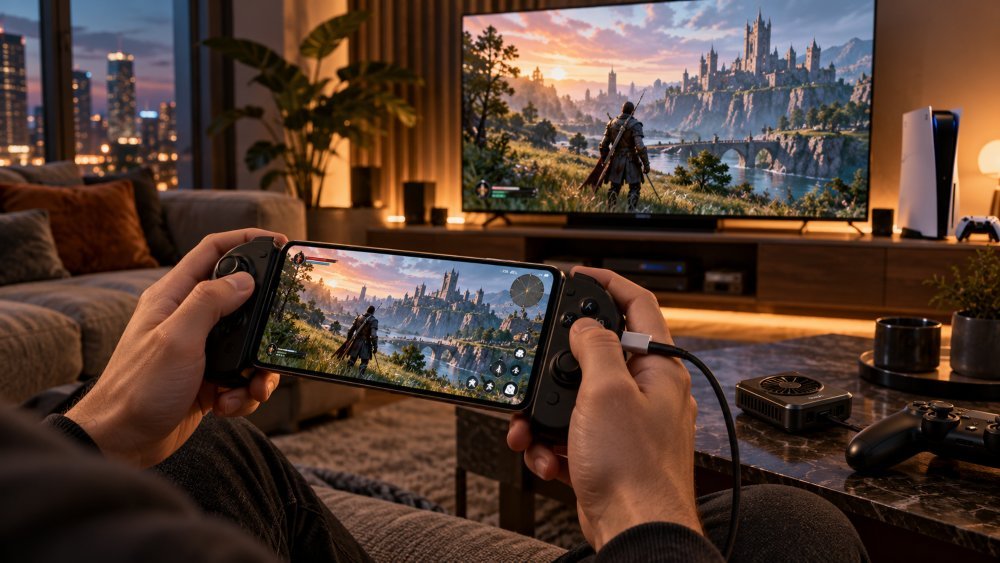
Smartphone technology has advanced considerably, allowing some devices to deliver high-quality graphics, responsive controls and smooth performance. For casual games and many competitive titles, the gap between mobile and console gaming may be less significant than it once was. However, performance depends on more than graphics alone. Frame rates, loading times, network stability and sustained performance can all influence how enjoyable a game feels. Consoles benefit from dedicated cooling systems, consistent hardware specifications and a power supply that does not depend on a portable battery. Smartphones must balance performance with heat management, energy consumption and other background processes. A demanding mobile game may initially run smoothly but reduce its performance as the device heats up. Android’s own performance guidance advises developers to test sessions of 15 minutes or longer for exactly this reason, since thermal behaviour only stabilises over a sustained load. Battery drain can also become a concern during longer sessions, particularly when playing graphically intensive titles at high brightness. Connectivity is another consideration. Mobile games that rely on an internet connection can be affected by network quality, especially when played away from a reliable Wi-Fi connection. Although consoles are not immune to connectivity problems, players using mobile data may face additional limitations depending on their location and network plan. Nevertheless, cloud gaming and improved smartphone hardware continue to offer new possibilities. With a compatible controller and a stable internet connection, players can access experiences that are much closer to traditional console gaming, although streaming quality and latency remain important factors. The thresholds are specific rather than vague: GeForce NOW asks for under 80ms of network latency to an NVIDIA data centre and around 15 Mbps for HD at 60 frames per second, rising steeply at higher resolutions.
Which Platform Offers The Best Gaming Experience?
Ultimately, the choice between console and mobile gaming comes down to personal preference and the type of experience a player wants. Consoles remain an attractive option for those who prioritise immersion, precise controls and extended gaming sessions. The combination of a large display, dedicated controller and hardware designed around gaming can make a substantial difference, particularly in genres that demand accuracy or benefit from detailed environments. Mobile gaming, meanwhile, offers unmatched convenience. Players can enjoy games during a commute, while travelling or whenever they have a few spare minutes. Smartphones also provide access to a vast selection of games that are designed specifically for touchscreen controls rather than adapted from another platform. For some players, mobile gaming is a convenient alternative to console gaming. For others, it is a separate experience with its own strengths, particularly when games are developed with smartphones in mind from the beginning. The most successful mobile adaptations recognise that simply shrinking a console game onto a smaller screen is not enough. Controls, interface design, performance and gameplay mechanics all need to work naturally on a phone. Console gaming still has clear advantages when it comes to immersion and dedicated controls, but mobile technology continues to improve. Rather than one platform making the other obsolete, both offer different ways to enjoy video games, with the best choice depending on the player’s priorities and expectations.
Disclaimer
This article is for informational purposes only and is intended for general educational purposes. Gaming performance and experience vary depending on the device, game, hardware specifications, and internet connection. Readers should review age ratings, in game purchases, and spending features before playing.