How Data Is Changing the Way Players and Fans Watch Esports
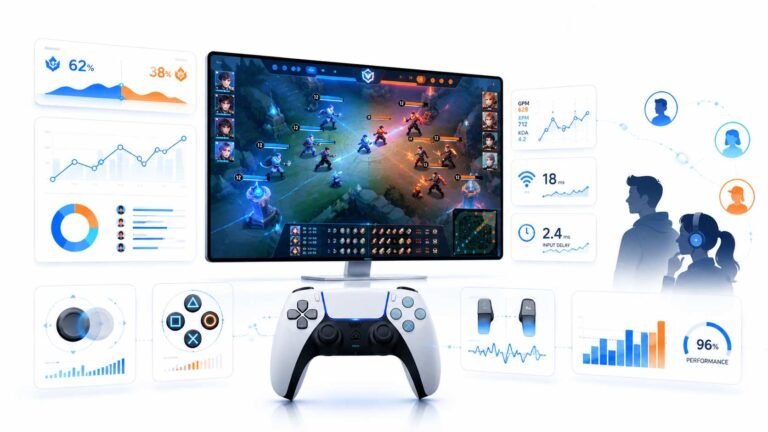
Esports viewing has changed a lot. Fans no longer watch only for big kills, clutch rounds, final scores, or highlight…

My monitor has a motion blur reduction mode. When I turn it on, the motion blur test looks much sharper but the screen gets darker and sometimes flickers a bit. What is it doing and should I use it?
Backlight strobing flashes the backlight once per frame instead of leaving it on, which reduces the smear your eyes see when tracking motion. It makes motion much clearer but lowers brightness and can cause visible flicker, especially at lower refresh rates. Use it for fast competitive games at high, stable frame rates.

Motion blur reduction modes, with names like ULMB, ELMB or DyAc depending on the brand, use backlight strobing.
Normally the backlight stays on continuously, and each frame is held on screen for the whole refresh period. As your eyes follow a moving object, that held image smears across your vision, which is motion blur. Strobing switches the backlight on only briefly for each frame, so your eyes see a short flash of each image instead of a held one. Motion looks much sharper, which is what our motion blur test shows.
The trade-offs:
Brightness. The backlight is off most of the time, so the screen is dimmer.
Flicker. Strobing is deliberate flicker. At high refresh rates, most people do not see it, but some notice it or find it tiring, and at lower rates it is more visible.
Variable refresh. Many monitors cannot strobe and run G-Sync or FreeSync at the same time, and strobing looks best when frame rates match the refresh rate exactly.
Use it for fast competitive games where you can keep frame rates high and steady. Leave it off for general use, single-player games with variable frame rates, and if you notice eye strain.
Tested on: Applies to monitors with backlight strobing modes. Behaviour reflects how strobing reduces sample and hold blur.
Checked by Calder Wright on . How we verify answers
Esports Performance Consultant at Gamepad Tester
Nadia works with competitive players on the hardware side of performance. Before a tournament a pad needs more than a working-not-working check: she profiles input latency across the exact connection the player will use, confirms both sticks read consistently through their full range, and checks that nothing drifts once the controller is warm. A pad that passes is cleared for play; one that does not is replaced rather than argued about. On Gamepad Tester she answers the competitive and performance questions, and reviews answers that tell a player their controller is good enough.
 Calder WrightFront-End Web Architect And Gamepad API Lead
 Elena RostovaHardware Diagnostics Engineer
 Garrett LindsayHardware Reviewer And Input Performance Specialist
 Venom’s Tech (Abhishek)Peripheral Reviewer And Tech Journalist
 Chloe HendersonHall Effect And Thumbstick Analyst
 Thiago AlvesHardware Repair Educator
 Devon MillerLow Latency And Input Timing Engineer
 Liam DaviesBluetooth And Wireless Test Engineer
Each answer is written by the specialist who owns that part of the hardware, tested on a real controller, and checked by a second team member. How we verify answers
Answers are free general guidance from the Gamepad Tester Team and the community. Opening a controller or replacing a thumbstick module can void your warranty, so check the maker's support or warranty first. Battery and soldering work carries a real risk of damage or injury.
Every test runs in your own browser with the Gamepad API. No sign up, no download, and your controller data never leaves your device.
Esports viewing has changed a lot. Fans no longer watch only for big kills, clutch rounds, final scores, or highlight…
If you have ever watched a video that looked choppy, played a game that felt sluggish, or noticed that scrolling on…
Content creators, marketers, and businesses are finding creating images and videos more and more effortless via AI. As…
The newest replies from players and the Gamepad Tester Team.