How Data Is Changing the Way Players and Fans Watch Esports
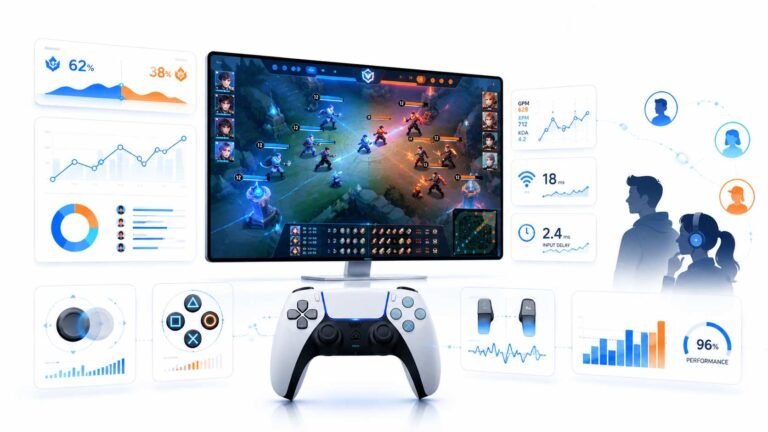
Esports viewing has changed a lot. Fans no longer watch only for big kills, clutch rounds, final scores, or highlight…

I have a 144 Hz main monitor and an old 60 Hz second monitor. Sometimes games on the main screen stutter when a video plays on the second. Your refresh rate test reads 144 on the main normally. Is the 60 Hz screen holding it back?
Windows handles mixed refresh rates much better than it used to, and each monitor runs at its own rate. But video playing on the second screen can still cause stutter on some setups. Update drivers, play games in exclusive full screen where possible, and test with the second screen idle.

Each monitor runs at its own refresh rate, so the 60 Hz screen does not force your main monitor down to 60. Windows has improved mixed refresh support a lot, and your test reading 144 on the main monitor confirms it is working.
The stutter you see is a known interaction on some setups. When something animated or a video plays on the second screen, the system is composing frames for two screens with different timing. Depending on the graphics driver, the game's display mode and features such as hardware overlays, that can cause occasional hitches on the faster screen.
Things that usually help. Update the graphics driver; mixed refresh issues are often fixed in updates. Run games in exclusive full screen rather than borderless windowed where the game allows. If you use variable refresh, test with it on and off for that game. Pause video on the second monitor during competitive sessions as a test: if the stutter disappears, you have found the interaction.
Use our refresh rate test on each monitor, with the browser window fully on that screen, to confirm both run at their correct rates.
Tested on: Applies to mixed refresh rate multi-monitor setups on Windows 11. Display settings per Microsoft's refresh rate support article.
Checked by Devon Miller on . How we verify answers
Low Level Systems Programmer at Gamepad Tester
Gabriel is a low-level C programmer working on desktop input architecture. He builds native tooling that samples stick and trigger telemetry at sub-millisecond intervals, below the rate a browser can reach, which gives a reference measurement to compare a web test against. When a browser reading looks wrong, his capture is how the team confirms whether the controller, the operating system or the page is at fault. On Gamepad Tester he provides the reference measurements behind the latency and drift answers.
 Calder WrightFront-End Web Architect And Gamepad API Lead
 Elena RostovaHardware Diagnostics Engineer
 Garrett LindsayHardware Reviewer And Input Performance Specialist
 Venom’s Tech (Abhishek)Peripheral Reviewer And Tech Journalist
 Chloe HendersonHall Effect And Thumbstick Analyst
 Thiago AlvesHardware Repair Educator
 Devon MillerLow Latency And Input Timing Engineer
 Liam DaviesBluetooth And Wireless Test Engineer
Each answer is written by the specialist who owns that part of the hardware, tested on a real controller, and checked by a second team member. How we verify answers
Answers are free general guidance from the Gamepad Tester Team and the community. Opening a controller or replacing a thumbstick module can void your warranty, so check the maker's support or warranty first. Battery and soldering work carries a real risk of damage or injury.
Every test runs in your own browser with the Gamepad API. No sign up, no download, and your controller data never leaves your device.
Esports viewing has changed a lot. Fans no longer watch only for big kills, clutch rounds, final scores, or highlight…
If you have ever watched a video that looked choppy, played a game that felt sluggish, or noticed that scrolling on…
Content creators, marketers, and businesses are finding creating images and videos more and more effortless via AI. As…
The newest replies from players and the Gamepad Tester Team.