How Data Is Changing the Way Players and Fans Watch Esports
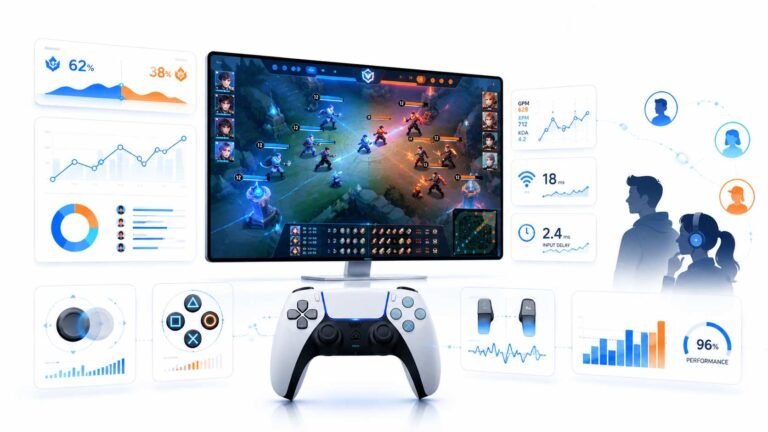
Esports viewing has changed a lot. Fans no longer watch only for big kills, clutch rounds, final scores, or highlight…

The box says 1ms response time but on your response time test moving objects still look blurry with trails. Is the 1ms claim false?
Response time claims are usually best-case grey to grey or MPRT figures, measured at the most aggressive overdrive setting. Real average transitions are often slower. And even with fast pixels, sample and hold motion blur remains unless refresh rate is high or strobing is used.

The claim is not exactly false, but it is a best case that rarely matches what you see.
There are two common figures. Grey to grey, GtG, measures how long pixels take to change between shades. Advertised GtG figures are often the fastest single transition, measured at the most aggressive overdrive setting, which may cause halos in real use. Average transitions across all shades are usually several times slower, especially dark ones.
MPRT, moving picture response time, measures perceived blur, and is often quoted with backlight strobing turned on. Without strobing, the real figure is much higher.
And there is sample and hold blur. Even with instant pixels, each frame stays on screen for the whole refresh period, so motion looks soft as your eyes track it. At 144 Hz, each frame lasts about 7 milliseconds, far longer than 1ms. That is why OLED panels, with near-instant pixels, still show some motion blur.
So to reduce what you see: use a sensible overdrive setting, run at the highest refresh rate, keep frame rates high in games, and try strobing if available. Reviews that measure average response times are far more useful than box figures.
Tested on: General explanation of display response time measurements. Test animations rely on browser frame timing per MDN's requestAnimationFrame documentation.
Checked by Devon Miller on . How we verify answers
Calibration And Signal Processing Programmer at Gamepad Tester
Arjun writes the maths between a controller and the screen. A raw axis value is noisy, unscaled and centred imperfectly, so his filters handle the parts that decide whether a test is useful: removing sensor noise without hiding a genuine fault, normalising ranges across controllers that report differently, and plotting the result as a clean graph where real drift is visible and jitter is not mistaken for it. On Gamepad Tester he maintains the calibration maths in the deadzone and drift tests, and explains in answers what a given reading does and does not prove.
 Calder WrightFront-End Web Architect And Gamepad API Lead
 Elena RostovaHardware Diagnostics Engineer
 Garrett LindsayHardware Reviewer And Input Performance Specialist
 Venom’s Tech (Abhishek)Peripheral Reviewer And Tech Journalist
 Chloe HendersonHall Effect And Thumbstick Analyst
 Thiago AlvesHardware Repair Educator
 Devon MillerLow Latency And Input Timing Engineer
 Liam DaviesBluetooth And Wireless Test Engineer
Each answer is written by the specialist who owns that part of the hardware, tested on a real controller, and checked by a second team member. How we verify answers
Answers are free general guidance from the Gamepad Tester Team and the community. Opening a controller or replacing a thumbstick module can void your warranty, so check the maker's support or warranty first. Battery and soldering work carries a real risk of damage or injury.
Every test runs in your own browser with the Gamepad API. No sign up, no download, and your controller data never leaves your device.
Esports viewing has changed a lot. Fans no longer watch only for big kills, clutch rounds, final scores, or highlight…
If you have ever watched a video that looked choppy, played a game that felt sluggish, or noticed that scrolling on…
Content creators, marketers, and businesses are finding creating images and videos more and more effortless via AI. As…
The newest replies from players and the Gamepad Tester Team.