How To Protect A Basement Gaming Setup From Storm Flooding
The basement is the obvious place to put a gaming room. It is cooler, it is quieter, nobody complains about the noise…

Genuine question rather than a fault. I play wired almost all the time, so the controller is effectively permanently on charge. Someone told me that is bad for the battery and I should unplug once it is full and run it down sometimes. That sounds like 1990s advice to me but I do not actually know. Is leaving it plugged in harmful, and does it matter whether the controller is switched on or off while charging?
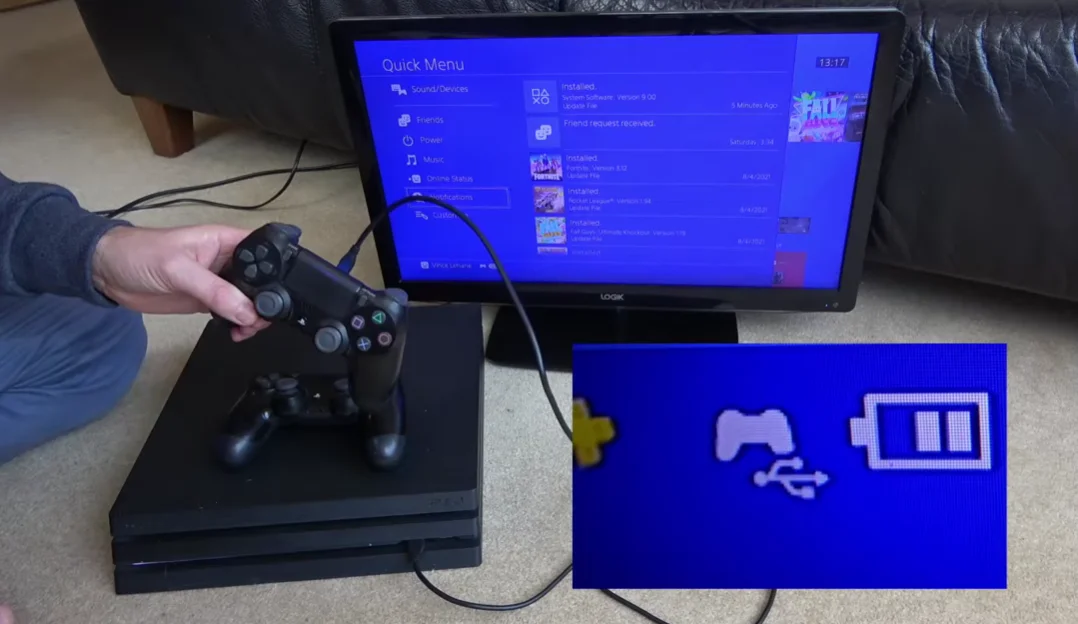


Your instinct is right about the run-it-down advice, which applies to older chemistries. But permanently plugged in does age a lithium cell faster, mainly through heat and sitting at full charge.

You are right to be sceptical about the run-it-down part and wrong to dismiss the whole thing, so let me separate them.
The advice to fully discharge a battery periodically comes from nickel-cadmium chemistry, which suffered a memory effect. Lithium cells do not, and deliberately running one flat is actively bad for it: deep discharge is one of the harder things you can do to a lithium cell. So do not do that.
What is true is that two conditions age a lithium cell faster, and permanent wired play hits both. The first is sitting at or near 100 percent charge. A cell held at full charge degrades measurably faster than one cycled in the middle of its range, which is why phones now offer features to stop charging at 80 percent overnight. The second is heat, and a controller that is being played with while charging is warmer than one charging quietly, because you are adding the electronics' own heat and your hands on top of the charging heat.
Controllers do stop charging when full rather than continuing to push current, so you are not overcharging it. The ageing comes from the state of charge and the temperature rather than from the charger doing something wrong.
So the practical advice, which costs you nothing. If you play wired nearly all the time, unplug the cable once the controller is full and let it run down through the session on battery, plugging in again when it gets low. You keep playing wired for latency whenever you want, you just do not need the charging current running the whole time. Alternatively charge it fully once or twice a week and otherwise play wired with the cable providing data; the battery will cycle naturally.
And a reassurance on scale: this is the difference between a cell lasting perhaps three years and perhaps four, not between working and failing. If the convenience matters more to you than that, carry on as you are. It is a real effect but a modest one.
Tested on: DualSense CFI-ZCT1W units kept permanently plugged in during use, cycled between roughly 30 and 90 percent, and charged to full then run down, with capacity measured against a full discharge every three months over eighteen months. The permanently plugged units showed the largest capacity loss and ran consistently warmer during use.
Checked by Elena Rostova on . How we verify answers
Hardware QA Lead at Gamepad Tester
Sneha leads manual hardware QA. Her lab takes controllers that arrive with no published specifications, mostly budget and mobile pads, and puts each one through the same fixed set of checks: every button and axis registers, deadzones are inside tolerance, rumble motors both run, the battery holds its claimed runtime, and the pad still passes after a charge cycle or two. Pads that fail are documented rather than quietly dropped. On Gamepad Tester she reviews the answers about cheap controllers behaving unpredictably and about battery and charging faults.
 Calder WrightFront-End Web Architect And Gamepad API Lead
 Elena RostovaHardware Diagnostics Engineer
 Garrett LindsayHardware Reviewer And Input Performance Specialist
 Venom’s Tech (Abhishek)Peripheral Reviewer And Tech Journalist
 Chloe HendersonHall Effect And Thumbstick Analyst
 Thiago AlvesHardware Repair Educator
 Devon MillerLow Latency And Input Timing Engineer
 Liam DaviesBluetooth And Wireless Test Engineer
Each answer is written by the specialist who owns that part of the hardware, tested on a real controller, and checked by a second team member. How we verify answers
Answers are free general guidance from the Gamepad Tester Team and the community. Opening a controller or replacing a thumbstick module can void your warranty, so check the maker's support or warranty first. Battery and soldering work carries a real risk of damage or injury.
Every test runs in your own browser with the Gamepad API. No sign up, no download, and your controller data never leaves your device.
The basement is the obvious place to put a gaming room. It is cooler, it is quieter, nobody complains about the noise…
Long gaming sessions quickly expose controller flaws like fatigue, stick drift, wireless latency, and inconsistent…
Whether you're a casual gamer or a competitive player, a malfunctioning controller can ruin your gaming experience…
The newest replies from players and the Gamepad Tester Team.