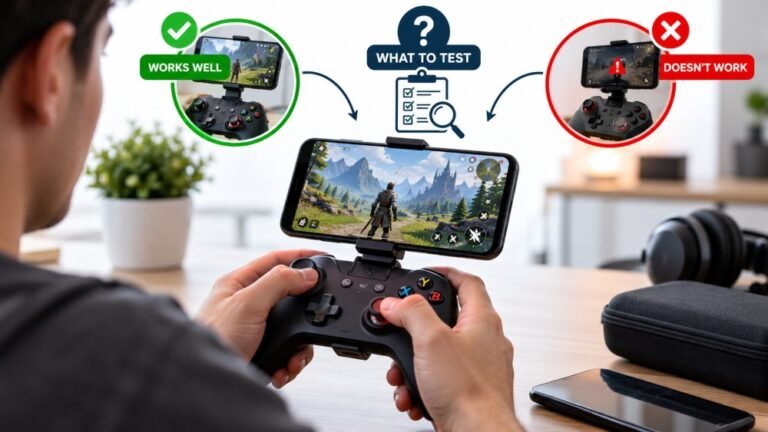
Playing Mobile Games With A Controller: What Works, What Doesn’t, And What To Test Before You Spend
You paired the controller, the light went solid, your phone said "Connected," and then the game did absolutely…

My PS5 controller drops out every time I move my hands and the cable wiggles. Your connection stability test shows disconnects whenever I bend the cable near the controller. I've tried two cables. Is the USB-C port on the controller broken?
If two cables both drop when bent near the controller, the controller's USB-C port is likely worn, dirty or has a cracked solder joint. Clean the port gently first. If it persists, use Bluetooth as a workaround and have the port repaired.

Testing with two cables was the right move, and the stability test pinpoints when the drops happen. If both cables drop when bent near the controller, the cable is unlikely to be the cause.
There are three possibilities. Lint and dust packed into the port stop the cable seating fully, so it rocks. The port's internal contacts or its shell have worn loose. Or the solder joints holding the port to the board have cracked, often from the weight of a cable hanging off the controller.
Start with cleaning. Power off and look into the port with a light. Gently remove lint with a wooden toothpick or a plastic pick, never metal, and blow it out with compressed air. Many loose ports are simply full of pocket fluff.
If the cable now clicks in firmly and the stability test stays clean while you move it, you are done. If not, the port or its solder is damaged. A repair shop can reflow or replace the port, which is a common job. Meanwhile, Bluetooth avoids the port entirely for play, and you can still charge carefully without moving the cable.
To prevent it, use a lightweight cable and avoid letting the plug take the controller's weight.
Tested on: Applies to DualSense CFI-ZCT1W and other USB-C controllers on Windows 11 with Chrome or Edge. Disconnects logged with the connection stability test.
Checked by Thiago Alves on . How we verify answers
Low Latency And Input Timing Engineer at Gamepad Tester
Devon is a low latency engineer. On a browser-based latency test the easiest mistake is measuring the wrong thing: network round trips, render queues and browser throttling can all add milliseconds that have nothing to do with the controller. His work is isolating the input path so that what the test reports is the hardware delay, and documenting the conditions under which the reading is trustworthy. On Gamepad Tester he owns the latency test and the input lag topic, and checks any answer that quotes a millisecond figure.
 Calder WrightFront-End Web Architect And Gamepad API Lead
 Elena RostovaHardware Diagnostics Engineer
 Garrett LindsayHardware Reviewer And Input Performance Specialist
 Venom’s Tech (Abhishek)Peripheral Reviewer And Tech Journalist
 Chloe HendersonHall Effect And Thumbstick Analyst
 Thiago AlvesHardware Repair Educator
 Liam DaviesBluetooth And Wireless Test Engineer
 Nadia BrooksEsports Performance Consultant
Each answer is written by the specialist who owns that part of the hardware, tested on a real controller, and checked by a second team member. How we verify answers
Answers are free general guidance from the Gamepad Tester Team and the community. Opening a controller or replacing a thumbstick module can void your warranty, so check the maker's support or warranty first. Battery and soldering work carries a real risk of damage or injury.
Every test runs in your own browser with the Gamepad API. No sign up, no download, and your controller data never leaves your device.
You paired the controller, the light went solid, your phone said "Connected," and then the game did absolutely…
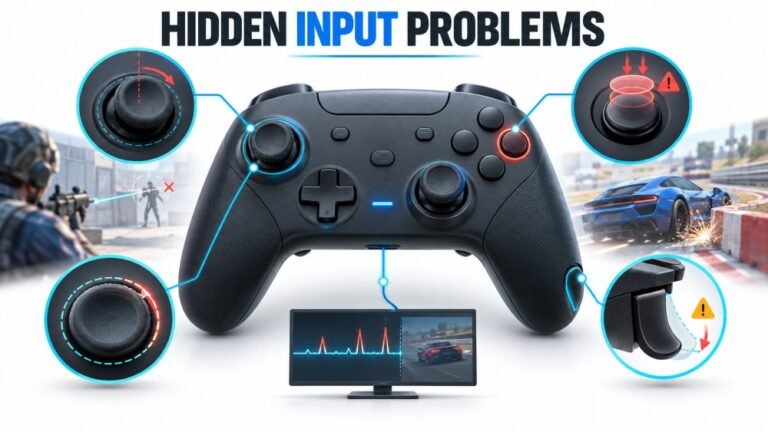
There is a particular kind of bad session that never gets diagnosed. You lose a duel you should have won. Your car…
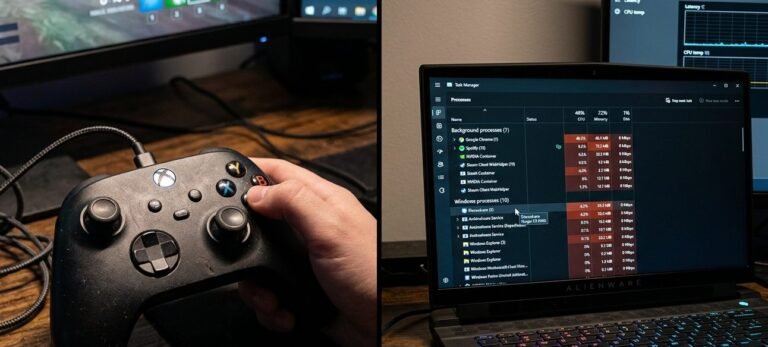
A shot fired half a second after I pulled the trigger, the same delay I had been chasing for two weeks, faulting…
The newest replies from players and the Gamepad Tester Team.