Playing Mobile Games With A Controller: What Works, What Doesn’t, And What To Test Before You Spend
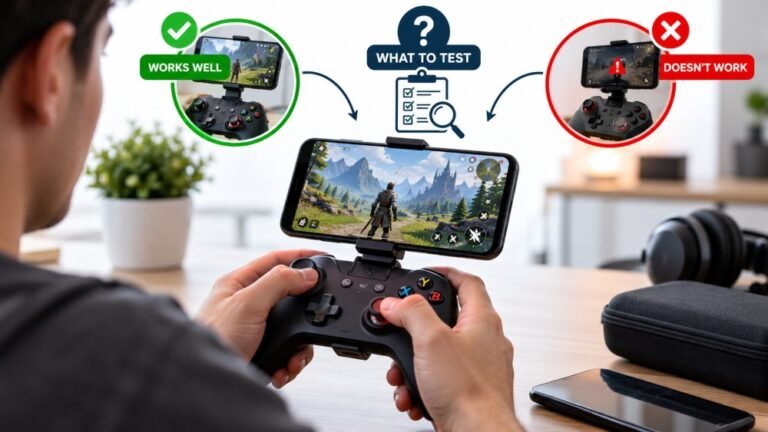
You paired the controller, the light went solid, your phone said "Connected," and then the game did absolutely…

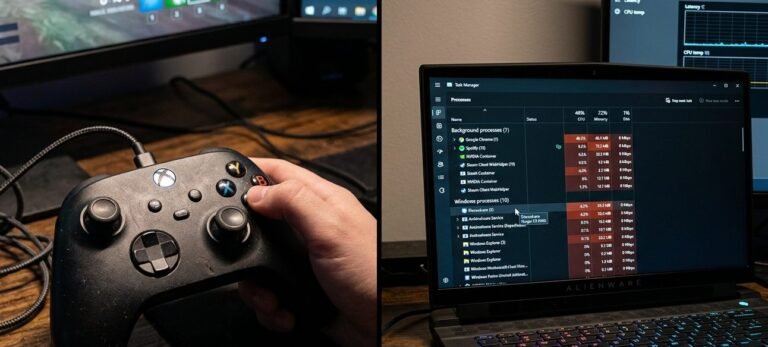
My PC keeps making the USB connect then disconnect sound every few seconds or minutes. It started when I plugged in my controller. Your connection stability test shows the controller dropping and coming back. How do I find the cause?
A repeating connect and disconnect sound means a USB device keeps dropping and reconnecting. Your test points to the controller. Try another cable and a rear USB port, turn off USB power saving, and check the controller's port. A free tool such as USBDeview can show which device is reconnecting if you are unsure.

That sound means a USB device is dropping off and reconnecting, and your stability test has already identified the controller as the one doing it.
The usual causes, in order.
The cable. A damaged or marginal cable can lose connection briefly, especially if it moves. Try a short, known good data cable.
The port. Front panel ports and hubs are more prone to dropouts. Use a rear port directly on the motherboard.
Power saving. Windows can suspend USB devices it thinks are idle. Turn off the power saving option on the USB Root Hub in Device Manager and disable USB selective suspend in the power plan.
The controller's port. Lint or wear in the controller's USB-C port lets the plug rock. Clean it gently with a wooden or plastic pick.
If you are ever unsure which device is causing the sound, a free tool such as USBDeview lists devices with their last connect times, so you can spot the culprit.
After each change, run the stability test for a few minutes. Zero drops and silence from Windows means it is fixed.
Tested on: Applies to USB controllers and devices on Windows 11. Power settings per Windows Device Manager and Power Options.
Checked by Tyler Vance on . How we verify answers
Low Latency And Input Timing Engineer at Gamepad Tester
Devon is a low latency engineer. On a browser-based latency test the easiest mistake is measuring the wrong thing: network round trips, render queues and browser throttling can all add milliseconds that have nothing to do with the controller. His work is isolating the input path so that what the test reports is the hardware delay, and documenting the conditions under which the reading is trustworthy. On Gamepad Tester he owns the latency test and the input lag topic, and checks any answer that quotes a millisecond figure.
 Calder WrightFront-End Web Architect And Gamepad API Lead
 Elena RostovaHardware Diagnostics Engineer
 Garrett LindsayHardware Reviewer And Input Performance Specialist
 Venom’s Tech (Abhishek)Peripheral Reviewer And Tech Journalist
 Chloe HendersonHall Effect And Thumbstick Analyst
 Thiago AlvesHardware Repair Educator
 Liam DaviesBluetooth And Wireless Test Engineer
 Nadia BrooksEsports Performance Consultant
Each answer is written by the specialist who owns that part of the hardware, tested on a real controller, and checked by a second team member. How we verify answers
Answers are free general guidance from the Gamepad Tester Team and the community. Opening a controller or replacing a thumbstick module can void your warranty, so check the maker's support or warranty first. Battery and soldering work carries a real risk of damage or injury.
Every test runs in your own browser with the Gamepad API. No sign up, no download, and your controller data never leaves your device.
You paired the controller, the light went solid, your phone said "Connected," and then the game did absolutely…
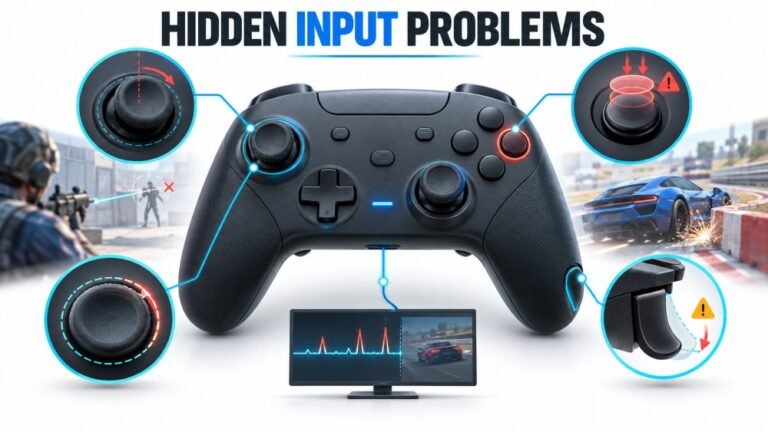
There is a particular kind of bad session that never gets diagnosed. You lose a duel you should have won. Your car…
A shot fired half a second after I pulled the trigger, the same delay I had been chasing for two weeks, faulting…
The newest replies from players and the Gamepad Tester Team.